

Cloud-Seeding Drones: Rainmaker Startup Creates Rain in Alaska
San Francisco start-up Rainmaker used drones to disperse silver iodide over Homer, Alaska, on August 23, producing 19 million gallons of water in three hours.

Stock photo for illustration only, not from the actual event
- Rainmaker deployed drones to seed clouds with silver iodide in Alaska
- The company claims to have generated 19 million gallons of rain in three hours
- Cloud seeding accelerates the natural condensation process inside water vapor
- Over 50 countries are currently developing active weather modification programs
On August 23, Cooper Freeman had no idea that the clouds hovering above his head were being saturated with a silver compound designed to trigger rainfall. Thousands of other residents in Homer, Alaska, were equally unaware that San Francisco-based start-up Rainmaker was conducting an unannounced weather modification experiment in their region.
The company claims its operation produced 19 million US gallons of water in the sky over a span of just three hours. This weather alteration approach, which has been practiced for over 80 years, relies on aircraft and drones to scatter compounds like silver iodide into clouds to form ice crystals, which eventually grow heavy enough to fall as rain or snow depending on lower temperatures.
Fundamentally, cloud seeding accelerates the natural water vapor condensation process inside clouds, allowing gravity to pull the resulting ice crystals down to the ground. However, this technology requires optimal climatic conditions, such as mountainous terrain or freezing environments like Alaska, to be truly effective.
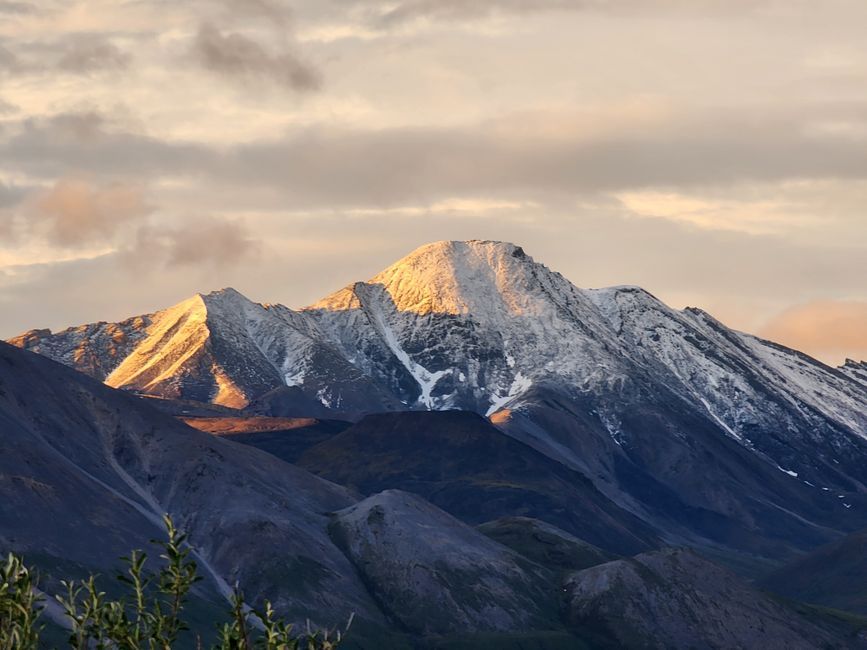
Stock photo for illustration only, not from the actual event
Growing anxieties surrounding global water security have intensified recently. United Nations Secretary-General António Guterres warned in July that the world is consuming freshwater at a pace faster than it can naturally replenish, aligning with reports indicating that the past five years mark the driest period for global rivers in over three decades.
"The resultant increase in concentration on the ground is in the parts per quadrillion, way below the threshold laid out by the FDA on what is allowable."
Augustus Doricko, Founder and CEO of Rainmaker
Augustus Doricko, founder and CEO of Rainmaker, is quick to address questions regarding the environmental safety of his company's silver iodide compound. He notes that Rainmaker releases only 20 grams of this silver variant per flight, distributed across thousands of square kilometers. Their drones utilize silver iodide flares that burn to atomize water particles, keeping them suspended in freezing clouds for hours until they transform into rainfall.
Cloud-seeding technology is not a silver bullet that can instantly spawn massive rainstorms out of nowhere. For instance, Rainmaker's impressive 19 million gallons actually translates to roughly 0.01 inches of rain spread across 100 square miles. While it offers a supplementary approach to combating regional dryness, it remains constrained by atmospheric conditions and requires careful balancing regarding chemical usage and ecological efficacy.
The roots of cloud seeding date back to 1946, when General Electric Research Laboratory researchers utilized dry ice as the initial seeding agent. A year later, silver iodide proved far more effective than dry ice, which quickly evaporates into useless gas. Nevertheless, statistical evidence highlights the patchy nature of this technique; Jon Meyer, assistant state climatologist at the Utah Climate Center, notes that under ideal conditions, cloud seeding squeezes out only about five to ten percent of extra precipitation.
Looking ahead, the substances sprayed into clouds may experience a major evolution. Recast Systems in San Francisco, led by CEO Olivia Li, is currently experimenting with an alternative seeding agent derived from soil amino acid proteins. Testing at Texas A&M University marks a potential shift away from silver iodide as the industry's default chemical compound.
Source: BBC Science & Environment
Found something wrong in this article? Report an issue with this article
Comments
Leave a Comment