

Incubation Effect: Why Taking Breaks Sparks Ideas
Discover the psychological concept of the incubation effect, explaining how stepping away from a problem helps your brain find creative solutions.

Stock photo for illustration only, not from the actual event
- Staring at a problem for hours often leads to mental block and rigid thinking.
- Stepping away for casual tasks allows the brain to subconsciously connect dots.
- The subconscious mind continues processing solutions even when you stop focusing.
- Taking breaks is not slacking off, but a vital mechanism for cognitive efficiency.
Have you ever spent hours stuck on a work problem with your mind completely blank, only to have a brilliant idea pop up while taking a shower or washing dishes? In psychology, this phenomenon is known as the incubation effect, which proves that stepping away from an obstacle yields better results than forcing yourself to push through.
This happens through everyday moments of mind-wandering, acting as short-term cognitive rests. While engaging in mindless routines like riding the bus or doing chores, the brain freely links unrelated concepts together without conscious effort.
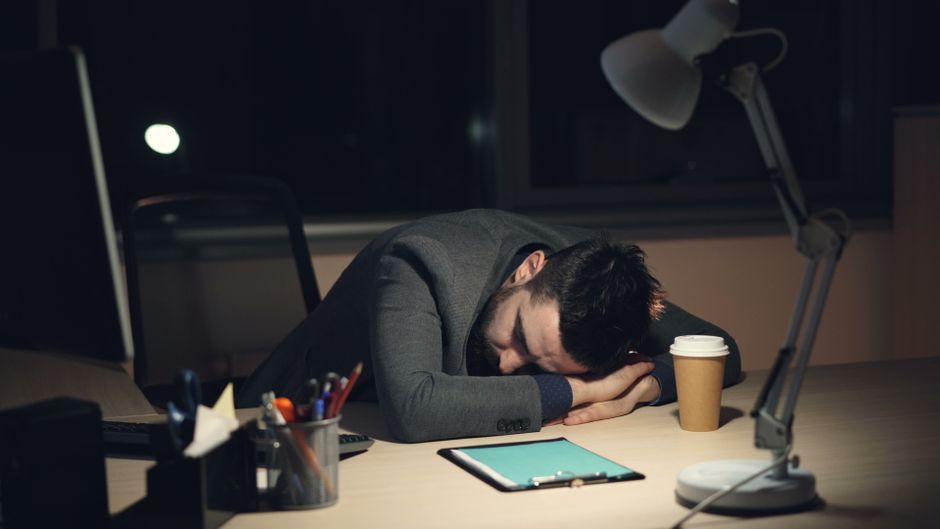
Stock photo for illustration only, not from the actual event
In neuroscience, this relates to the Default Mode Network (DMN), a brain network that activates when we are not actively focused on a specific task. Much like background processing on a computer, this state is essential for consolidating memories, making creative leaps, and synthesizing complex information.
This cognitive process benefits problem-solving in three major ways:
- It helps the brain break free from initial fixation and flawed solution paths.
- It acts as a mental reset button to reorganize thoughts effectively.
- It allows the subconscious mind to work on the problem behind the scenes.
In modern work cultures that glorify non-stop hustle, taking a break is often mislabeled as slacking off. However, demanding tasks that require deep analysis and creative thinking actually require regular pauses for the brain to function at its peak.
Therefore, when you hit a creative wall, forcing yourself to keep staring at the screen will only lead nowhere. Granting yourself permission to step away, change the environment, or rest your eyes allows the brain to settle and deliver the answers naturally.
Source: Techsauce
Found something wrong in this article? Report an issue with this article
Comments
Leave a Comment