

World's largest penguin colony loses top spot after decline
Aerial surveys show chinstrap penguin nests dropped by 63% on Zavodovski Island near Antarctica due to climate change and food shortages.

Stock photo for illustration only, not from the actual event
- Chinstrap penguin populations on Zavodovski Island dropped by 63% between 2011 and 2025
- Warming ocean waters have forced krill, their primary food source, to move southward
- Macaroni penguins in the same habitat have thrived due to a more flexible diet
- Zavodovski Island has lost its status as the world's largest penguin colony to Cape Adare
Nearly two-thirds of chinstrap penguins have vanished from a remote volcanic island near the Antarctic continent, according to recent aerial surveys that strip the location of its long-held title.
Researchers from the British Antarctic Survey (BAS) reported a 63% drop in occupied chinstrap penguin nests in 2025 compared to the same period in 2011. As a result, Zavodovski Island—part of the UK overseas territory of the South Sandwich Islands—no longer hosts the largest penguin colony on Earth.
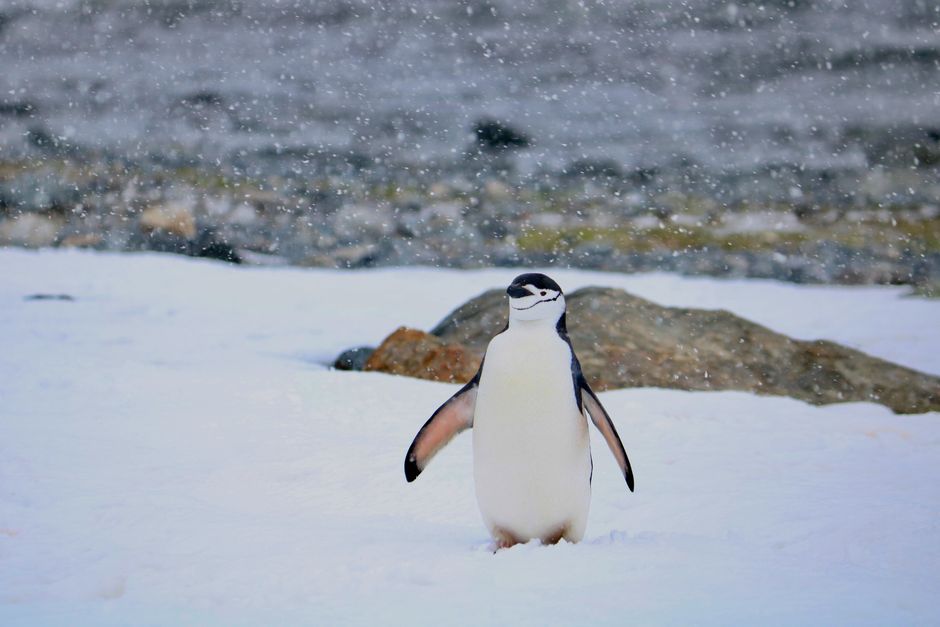
Stock photo for illustration only, not from the actual event
The research team undertook a 15-day sea voyage to study the avian inhabitants on the bleak, rocky terrain, utilizing drones, aerial photography, and tracking devices fitted to 20 individual birds to measure the population shift accurately.
Scientists attribute this alarming population drop to rising ocean temperatures driven by climate change, which has severely disrupted the food supply. Dr. Ratcliffe explained that as waters warm, krill—the staple diet of chinstrap penguins—have migrated southward, leaving the penguins unable to follow due to sea-ice barriers and a lack of suitable nesting islands.
This trend highlights the extreme vulnerability of polar ecosystems to minor shifts in ocean temperatures. When foundational species like krill shift their habitats, top predators that lack dietary flexibility face immediate survival crises, while more adaptable species manage to exploit alternative food sources.
The island also sits beneath the shadow of Mount Curry, an active volcano known locally for emitting pungent volcanic fumes that gave nearby sites names like Stench Point and Asphyxia Plain. However, researchers confirmed the declines have been steady since 2011 without major eruptions since 2016, pointing directly to broader marine food web shifts.
"Our data shows that the cold-adapted Antarctic chinstrap species are no longer thriving beside their sub-Antarctic neighbours."
Dr. Ratcliffe, British Antarctic Survey
In a surprising twist, macaroni penguins nesting on the same island have increased significantly. Tracking data revealed these birds have a broader, more adaptable diet, foraging in warmer northeastern waters for fish and other crustaceans.
The title of the world's largest penguin colony now belongs to Cape Adare in the Ross Sea, located over 5,000 kilometers away on the opposite side of the Antarctic continent. The findings have been published in the scientific journal Current Biology.
Source: BBC Science & Environment
Found something wrong in this article? Report an issue with this article
Comments
Leave a Comment