

Himalayan Tour Operators Adapt to Climate Risks After Disasters
Deadly avalanches and floods in the Himalayas force tour companies to overhaul safety strategies ahead of the peak trekking season.

Stock photo for illustration only, not from the actual event
- An avalanche at Himlung Himal base camp on Sept 27 killed at least 15 people
- Flooding near Langtang National Park resulted in 1,455 deaths and 5,285 missing
- Glaciers are melting 65% faster with only about 0.1% monitored
- Operators like Furtenbach and Intrepid are independently managing daily climate risks
The tourism industry across the Himalayan mountain range is confronting severe operational risks following catastrophic natural disasters that underscore the extreme fragility of the region. Tour operators are currently absorbing substantial business shocks, ranging from trip cancellations to emergency route alterations, as the physical destination itself reveals mounting vulnerabilities.
These incidents unfolded just ahead of the peak trekking season. A tragic avalanche struck the Himlung Himal base camp in the Manang district on September 27, leaving at least 15 people dead while staff were fixing ropes ahead of an upcoming expedition. This followed a devastating glacial flood a month downstream from Nepal’s Langtang National Park near the Tibet border, which was triggered by collapsing glacial rock and ice accompanied by a 5.2 magnitude tremor.
A collaborative report published by consultancy Systemiq, the Integrated Mountain Initiative, and India’s GB Pant National Institute of Himalayan Environment revealed that glaciers in the region are retreating 65% faster than they were ten years ago. This rapid retreat leaves behind unstable lakes held back by loose rock and debris above populated valleys, while only about 0.1% of the estimated 40,000 glaciers in the Himalayas receive active monitoring.
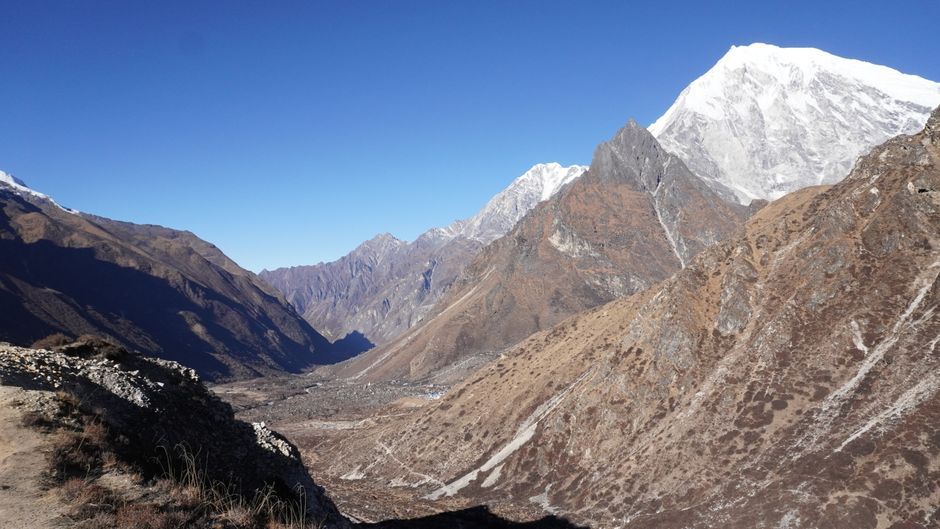
Stock photo for illustration only, not from the actual event
Deeptanshu Kotru, project lead at Systemiq, told Skift that the primary solution lies in risk-based monitoring focused on the most hazardous glaciers and lakes, paired with early warning systems capable of triggering timely road closures and evacuations.
"Risk-based monitoring of the most dangerous glaciers and lakes, combined with early warning that triggers road closures and evacuations."
Deeptanshu Kotru
In the absence of comprehensive state infrastructure, tour operators are shouldering the costs directly. Furtenbach Adventures has canceled expeditions and rerouted climbs under booking terms that offer no refunds for weather-related cancellations. Meanwhile, Intrepid Travel deployed its local operations manager to personally drive damaged routes to determine where adjustments or cancellations were necessary.
Industry analysts note that these consecutive disasters highlight a critical juncture for high-altitude tourism management. The reliance on independent operational assessments by private companies points to a broader infrastructure gap in national destination planning. Moving forward, shifting destination metrics from mere visitor footfall to high-value regenerative tourism could provide a vital economic and environmental buffer for the Himalayan trekking economy.
Source: Skift
Found something wrong in this article? Report an issue with this article
Comments
Leave a Comment