

Louis Vuitton 2027: James Chinlund Fills Louvre Runway
Designer James Chinlund transforms the Louvre courtyard for Louis Vuitton's Spring-Summer 2027 show with hovering concept vehicles floating amidst classical architecture.

Stock photo for illustration only, not from the actual event
- James Chinlund designed the set for the Louis Vuitton Spring-Summer 2027 show at the Louvre.
- Four variations of concept vehicles were suspended at varying heights above the runway.
- The vehicles feature cream and forest-green finishes paired with the iconic Damier pattern.
- The installation contrasts urban mobility with lightweight, fluid garment designs.
For the Louis Vuitton women's Spring-Summer 2027 runway show in Paris, production designer James Chinlund crafted an immersive environment that bridges classical heritage with speculative futures. The installation featured concept vehicles suspended at different heights, appearing to float effortlessly among the historic façades of the Louvre courtyard.
Developed in four distinct variations, the vehicles displayed striking geometric silhouettes. Their exteriors combined refined cream and forest-green finishes with graphic stripes and Louis Vuitton's signature Damier pattern. Glowing headlights and red taillights further anchored their automotive aesthetic, evoking machines pulled straight from an alternative vision of urban transit.
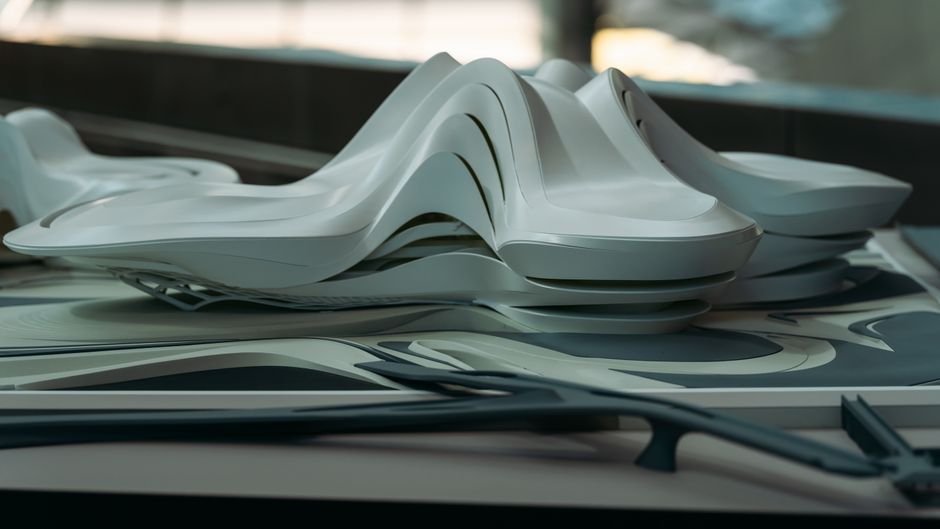
Stock photo for illustration only, not from the actual event
Integrating futuristic installations into historic landmarks like the Louvre highlights a growing trend in high fashion where runway shows double as immersive architectural art. By deliberately incorporating the centuries-old stone walls rather than concealing them, Chinlund uses the monumental backdrop to frame an imagined metropolitan future that dialogues directly with the brand's narrative.
Beneath these hovering forms, an asphalt-like runway stretched across the courtyard, mapping out a tangible route for the models at ground level. This clever arrangement established a striking visual dialogue between movement and stillness, with the suspended cars frozen midair against ancient masonry.
Reflecting Nicolas Ghesquière's ongoing fascination with contemporary urban complexities, the scenography mirrored the dualities of modern life. While the floating vehicles represented city congestion and relentless motion, the Ergonomie collection itself championed lightness. It explored the relationship between clothing and the body through ultralight fabrics, fluid constructions, and relaxed silhouettes.
Ultimately, the juxtaposition between the rigid sculptural machinery and the freeing movement of the garments created a powerful conceptual tension throughout the show.
Source: designboom
Found something wrong in this article? Report an issue with this article
Comments
Leave a Comment