

Why are more roofs not made of solar tiles?
Exploring why solar roof tiles lag behind traditional panels due to higher costs, heat retention, and Tesla's market exit.

Stock photo for illustration only, not from the actual event
- Solar roof tiles preserve the aesthetic appeal of historic buildings.
- Installation costs can be double that of traditional solar panels.
- Trapped heat reduces the energy efficiency of solar tiles.
- Matrix shingling technology improves output and hides metal wires.
Integrating solar cells directly into roof tiles is often seen as an ideal alternative for people who dislike the look of traditional panels, or for historic buildings bound by strict heritage regulations. Kate Collardson, operations manager at Solar Service of Colorado, notes that many people in the US still dislike the visual impact of conventional setups, having worked across various roles from installer to instructor.
However, the sector faced a major setback in August when Tesla's website stopped offering solar roofs following disappointing sales figures and a lawsuit over sudden price hikes. This high-profile exit sent shockwaves through the entire industry, prompting mixed reactions from market players.
For Swiss company Freesuns, the shift represents an opportunity. Deborah Learoyd, CEO and managing director, estimates that company sales have expanded by 20 to 30 percent since its founding in 2019, despite components being manufactured in smaller batches that limit economies of scale.
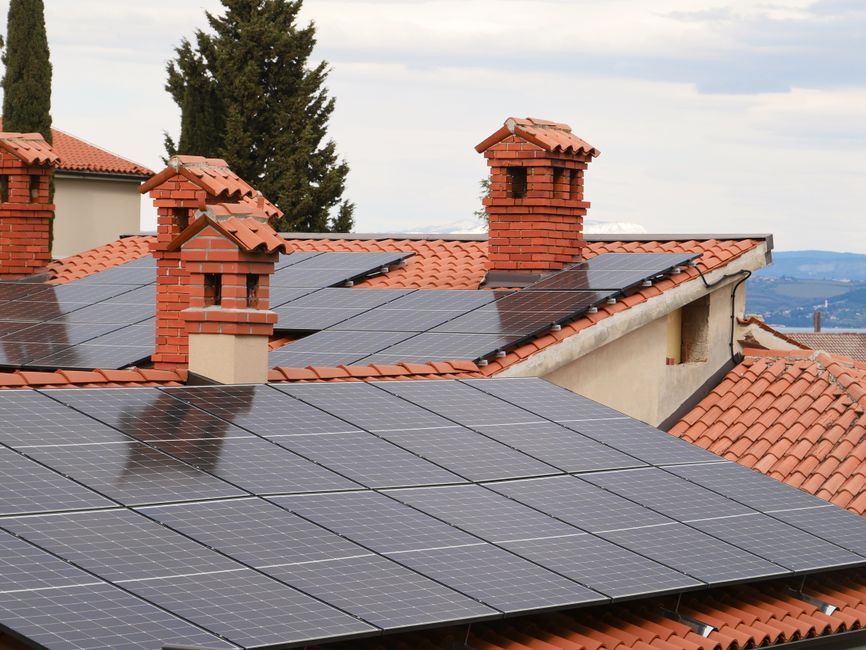
Stock photo for illustration only, not from the actual event
Additional hurdles include complex building regulations and the need for close collaboration among roofers, solar installers, and electricians. Collardson points out that repairing solar shingles is costlier than fixing standard photovoltaic setups, with initial installation expenses potentially doubling the price of a standard roof-mounted panel system.
"The reason why all solar cells are black, and increasingly the whole panel is now black, is because black is the best absorbing colour."
Ben Graves
Efficiency is another bottleneck. Because the tiles are smaller and sit closer to the roof structure, airflow is restricted, causing heat to build up and impair performance. Ben Graves, co-founder of UK-based Sunsave, explains that colored tiles suffer even greater efficiency losses since black remains the optimal absorption color.
The slower adoption rate of solar roofs compared to standard panels underscores the engineering and logistical complexities of building-integrated photovoltaics. While standard panels benefit from mass production and standardized mounting systems, solar tiles require customized integration that currently defies easy economies of scale.
Nevertheless, technological innovations offer a path forward. Matrix shingling involves cutting solar cells into narrow strips, layering them like shingles, and connecting them with conductive adhesive instead of metal wires. According to Learoyd, this allows current to bypass shaded spots, such as bird droppings, while concealing silver wires for a cleaner look.
Looking ahead, Learoyd believes that better automated design software will eventually lower construction barriers and boost industry confidence, keeping her optimistic a decade after her own installation.
Source: BBC Science & Environment
Found something wrong in this article? Report an issue with this article
Comments
Leave a Comment