

OpenAI Grants Free Access to Top-Tier ChatGPT for 100,000 Researchers
OpenAI launches the ChatGPT for Academic Researchers program to support 100,000 scholars worldwide by 2027 with GPT-5.6 models, though Thai institutions are currently excluded.
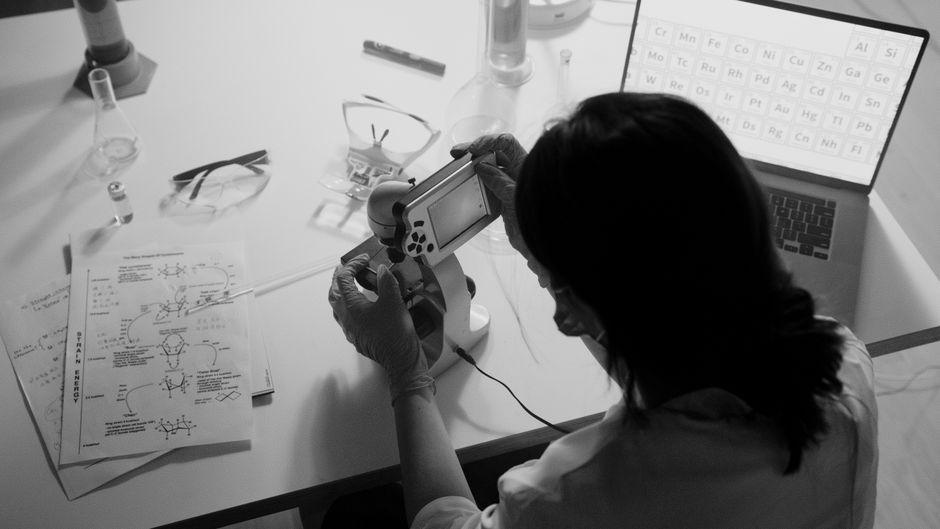
Stock photo for illustration only, not from the actual event
- OpenAI introduces a free program providing top-tier AI models to 100,000 university researchers by 2027.
- The initial rollout begins in the US and Europe, with 17 eligible institutions in South Korea.
- Participants gain access to the GPT-5.6 family along with advanced scientific toolsets and higher usage quotas.
- The initiative is part of a broader commitment exceeding 250 million dollars in external research funding.
OpenAI has officially launched a major initiative to grant university researchers worldwide free access to its most advanced artificial intelligence models for up to 100,000 scholars by 2027. The program includes an extensive suite of scientific instruments, ranging from genetic data analysis tools to automated grant proposal drafting assistance. The explicit goal is to prevent frontier AI capabilities from remaining concentrated solely within major tech corporations or heavily funded laboratories. However, academic institutions in Thailand will not yet be able to access these benefits during the initial phases.
Titled ChatGPT for Academic Researchers, the initiative debuted on July 29, 2026, granting eligible academic staff free access to frontier models across science, mathematics, and engineering. The initial summer phase kicked off with 10,000 researchers across prominent institutions such as the Institute for Advanced Study in the United States and the École normale supérieure in France, ahead of the full 100,000-user expansion targeted for 2027.

Stock photo for illustration only, not from the actual event
Participants will secure full access to OpenAI's frontier models across ChatGPT, ChatGPT Work, and Codex, alongside the GPT-5.6 family from day one. Additional benefits include elevated usage quotas, expanded context windows, and enhanced deep research capabilities. Each workspace owner is also permitted to invite up to four colleagues from the same institution to collaborate within the platform.
The GPT-5.6 family is structured into three distinct tiers: GPT-5.6 Terra, balancing capability and cost-efficiency for daily research tasks; GPT-5.6 Luna, engineered for rapid response on lighter workloads; and GPT-5.6 Sol, built to tackle the most demanding mathematical and scientific challenges. Benchmark tests indicate that GPT-5.6 Sol achieved an 83% score on the FrontierMath Tier 4 research-level reasoning test, outperforming its predecessor, and solved 31.5% of complex biology problems on GeneBench Pro.
"Not every institution qualifies"
OpenAI
By focusing specifically on university researchers and enforcing strict eligibility criteria, OpenAI is intentionally building academic validation for its models through peer-reviewed publications, distinguishing this initiative from general public consumer usage.
Regarding application guidelines, interested researchers must hold faculty or postdoctoral positions at accredited institutions, possess relevant academic papers published on repositories like arXiv, bioRxiv, or ChemRxiv within the past three years, and complete identity verification through SheerID. This program forms part of OpenAI's broader external research funding commitments, including the 50 million dollar NextGenAI project and collaborations with the United States Department of Energy.
Source: Techsauce
Found something wrong in this article? Report an issue with this article
Comments
Leave a Comment