

Tim Walker's Fairyland Explores Five Decades of Queer Activism
British photographer Tim Walker presents Fairyland: Love and Legends at London's National Portrait Gallery, featuring 250 portraits from today until February 7, 2027.

Stock photo for illustration only, not from the actual event
- Tim Walker's exhibition Fairyland opens at London's National Portrait Gallery from October 9, 2026, to February 7, 2027.
- The exhibition features around 250 portraits of activists, artists, and cultural figures including Ian McKellen and Chappell Roan.
- It traces queer community history from the 1970s onwards while reclaiming the historical slur 'fairy' into an identity expression.
- Highlights include portraits of the Rebel Dykes collective and a dedicated section on the 1980s HIV/AIDS crisis response.
British photographer Tim Walker has turned his fantastical visual language toward queer history in Fairyland: Love and Legends, a major exhibition opening at the National Portrait Gallery in London today, October 9, 2026. Curated by Susanna Brown and designed by Walker’s longtime collaborator Shona Heath, the exhibition brings together around 250 specially created portraits of activists, artists, performers, and cultural figures, including Isaac Julien, Ian McKellen, and Chappell Roan.
On view until February 7, 2027, the exhibition spans five years of collaborative work with queer people and their allies in Britain and beyond. It connects the activism of the 1970s and 1980s with contemporary voices working across art, fashion, music, film, and politics. Its title deliberately reclaims the word 'fairy'—historically used as a homophobic slur—as an expression of identity and belonging, approached through the wit and theatricality characteristic of Walker’s photography.
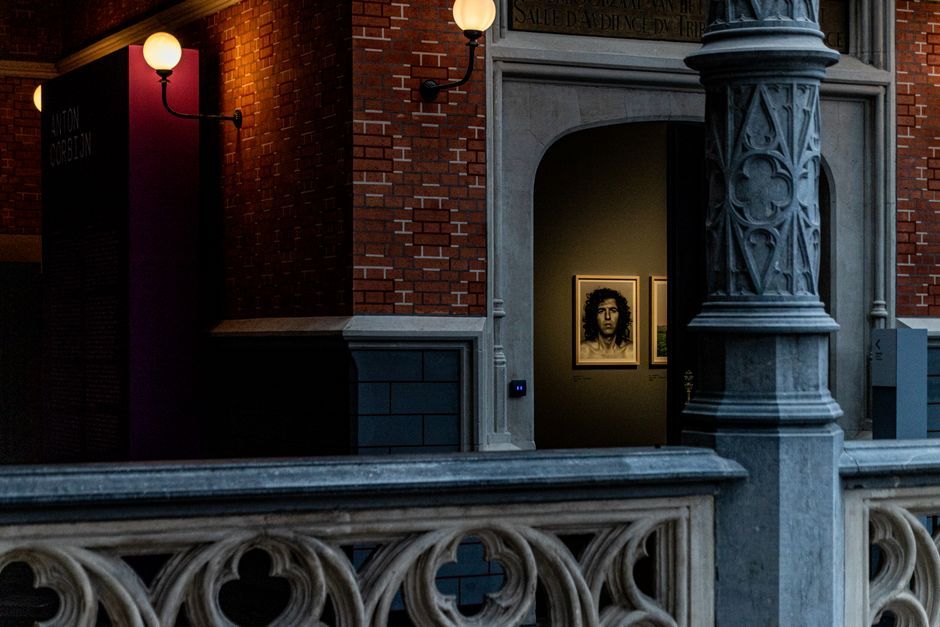
Stock photo for illustration only, not from the actual event
The exhibition opens with portraits of activists who fought for the right to love during the 1970s and 1980s, including founding members of the Gay Liberation Front and Stonewall such as Olivette Cole-Wilson, Andrew Lumsden, Lisa Power, and Tom Robinson. Walker draws upon 16th-century Tudor portraiture by Hans Holbein the Younger and Nicholas Hilliard, framing these historical figures as an imagined queer aristocracy.
Drawing inspiration from Tudor-era fine art traditions for contemporary photography serves to elevate the status of subjects who have historically faced marginalization. By placing them within a visual framework traditionally reserved for power and official remembrance, the exhibition challenges historical power dynamics in portraiture.
Other portraits feature campaigners, writers, and cultural figures who made queer lives visible, including Ted Brown, Caroline Paige, Gilli Salvat, and Peter Tatchell, alongside filmmaker James Ivory and author Sarah Waters. Sitters were also invited to bring personal objects of significance to their sessions, such as Jane Cholmeley presenting the original shop sign from Silver Moon Women’s Bookshop founded in 1984, Sunil Gupta holding his camera, and Isaac Julien clasping a conch shell from his 1989 film Looking for Langston.
A dedicated section addresses the 1980s HIV/AIDS crisis through portraits of healthcare professionals, nurses, and musicians who contributed to the period's response, including Marc Almond, Holly Johnson, and Jimmy Somerville. Walker noted his intention to bring the energy of disco into the hospital wards to celebrate tireless efforts toward awareness and proper care despite the era's fear and discrimination.
"The Fairyland exhibition is me finally placing myself in the queer realm with confidence and greeting all the other friends who live here. Just as I learned from the queer artists who came before me, some of whom I’m lucky enough to have met and photographed here, Fairyland is me saying you are not alone. I want visitors to the exhibition to remember that your difference is your power. It is a precious and beautiful thing."
Tim Walker
Another central gallery focuses on the Rebel Dykes, a post-punk collective that campaigned for nuclear disarmament, environmentalism, and HIV solidarity. Inspired by Karlheinz Weinberger’s photographs of 1960s biker gangs, Walker created large-scale group portraits accompanied by a short film documenting their community and political work.
Source: designboom
Found something wrong in this article? Report an issue with this article
Comments
Leave a Comment