

How to Find More Words in NYT Spelling Bee: 7 Tips
Discover 7 proven strategies from 8 months of playing NYT Spelling Bee to boost your score and reach Genius level.

Stock photo for illustration only, not from the actual event
- Knock out short 4-letter words using the center letter first for quick points.
- Force yourself to try weird words like BOOBOO or NABOB which yield equal points.
- Find the pangram early using all seven letters to unlock new combinations.
- Leverage word families and suffixes like -S, -ED, and -ING to multiply scores.
The author has played the NYT Spelling Bee puzzle every single morning for eight months. Starting from a modest Solid level of around 20 words in the first week, the author now regularly reaches the Genius level and has secured multiple Queen Bee perfect scores. The secret lies not in having a massive vocabulary, but in applying the right strategy.
Every Spelling Bee features easy words hidden in plain sight, specifically short 4-letter words built from the center letter and one or two outer letters. Clearing these out first yields quick points and warms up the brain. Players should then force themselves to embrace unconventional words like BOOBOO, NABOB, or TUBAL. Although conversational speakers rarely use them, they remain entirely valid and carry the exact same point value as standard words.
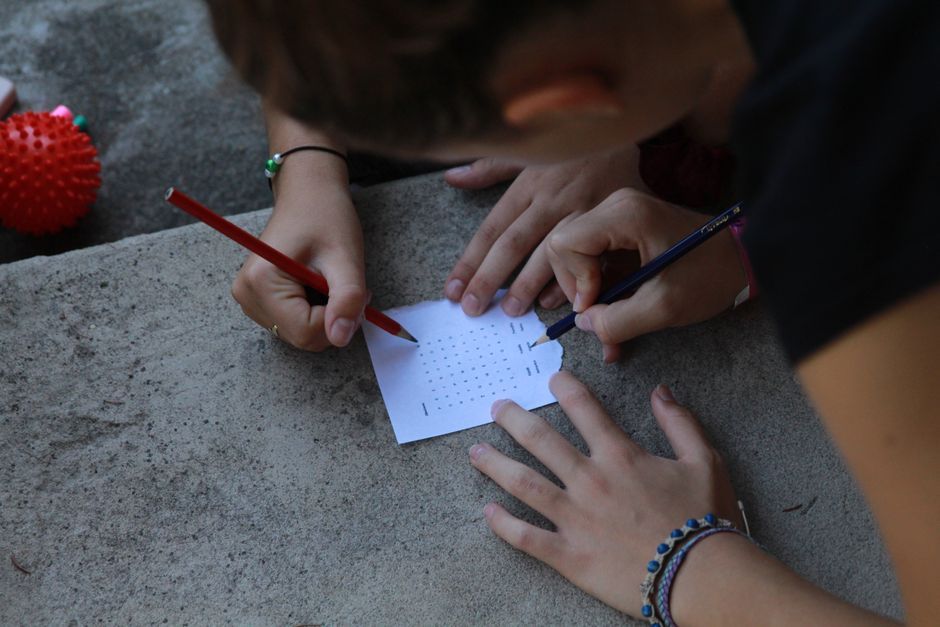
Stock photo for illustration only, not from the actual event
Word puzzles like the NYT Spelling Bee test systematic thinking and morphological awareness rather than sheer memorization. Consistent practice trains the brain to recognize letter pattern clusters rapidly, improving cognitive flexibility across verbal reasoning tasks.
A reliable rule of thumb is testing any letter combination that might resemble a word since the game penalizes nothing for wrong guesses. Every puzzle contains at least one pangram utilizing all seven available letters. Spotting this key element early alters the entire dynamic by unlocking the brain's ability to visualize fresh letter arrangements.
"Every Spelling Bee has at least one pangram, a word that uses all seven letters. Finding it early changes everything because it unlocks your brain to see new combinations."
SolveDaily
An effective method involves writing down all seven letters, starting with the center character, and appending outer choices while scanning for common prefixes like UN-, RE-, IN-, OUT- alongside suffixes such as -ING, -ED, -ER, -ION. Maintaining focus on the mandatory center letter serves as both the primary constraint and the greatest tactical advantage.
Beginners often stumble over the fact that Spelling Bee accepts plurals, past tenses, and present participles. If BALL qualifies, players should immediately test BALLS, BOOTED, and BOOTING. Exploiting inflected forms represents the simplest method for driving up daily scores without needing an expanded base vocabulary.
Words naturally cluster into tight families. Discovering BUTT should immediately prompt a search for BUTTS, BUTTED, and BUTTING. Prefixes and suffixes act as goldmines, meaning every successful find should trigger a quick mental check for its grammatical relatives to yield three or four additional valid entries.
Finally, stepping away from the puzzle activates subconscious cognitive processing. Pausing for ten minutes to make coffee after hitting a plateau often allows the brain to spontaneously generate missed terms like NANOBOT or BLATANT upon return.
Source: Dev.to
Found something wrong in this article? Report an issue with this article
Comments
Leave a Comment