

Carsten Höller’s Goggles Turn the World Upside Down
Carsten Höller's wearable artwork Upside-Down Goggles from 1994 inverts vision, inspired by a 19th-century psychology experiment.

Stock photo for illustration only, not from the actual event
- Upside-Down Goggles is a 1994 wearable artwork by Carsten Höller
- The device inverts the wearer's field of vision and disrupts movement
- Inspired by 1890s psychology experiments conducted by George M. Stratton
- Demonstrates that visual perception is deeply tied to physical movement
Artist Carsten Höller has long explored experiences that interrupt our usual sense of control, notably through his wearable artwork titled Upside-Down Goggles, first presented in 1994. The device inverts the wearer's field of vision, transforming familiar surroundings into an unsettling test where basic gestures require deliberate attention.
This artistic exploration draws inspiration from 19th-century psychology experiments. American psychologist George M. Stratton wanted to understand how humans perceive the world upright when retinal images are inverted. To investigate, he constructed an optical apparatus, wearing it for 21.5 hours over three days in 1896, followed by an 87-hour investigation over eight days in 1897.
As Stratton navigated his garden and village, he recorded the difficulties of coordinating movements with sight. Spatial relationships became unfamiliar, helping to establish visual adaptation as a formal subject of psychological research by showing that perception involves active interaction between sight and movement.
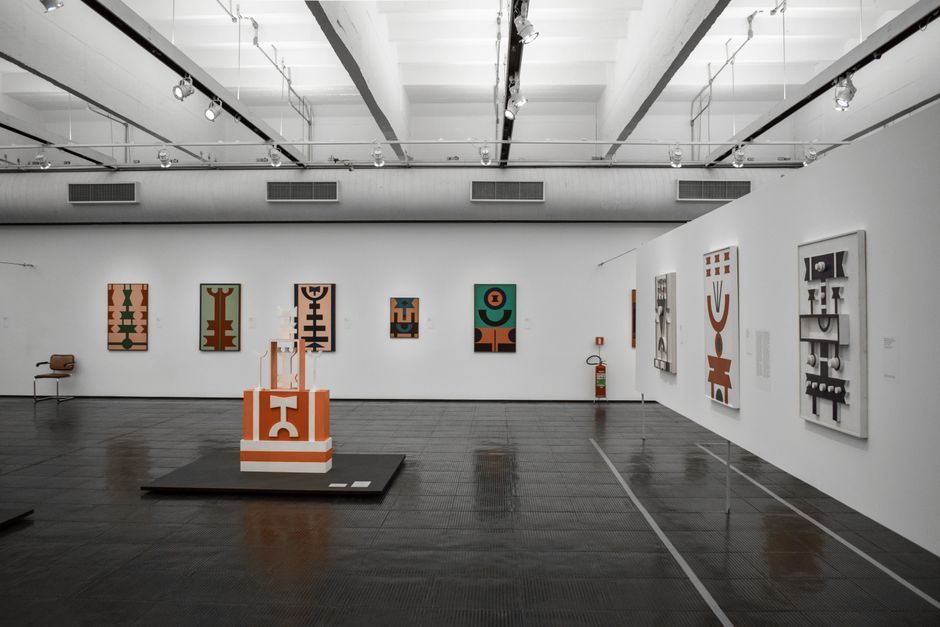
Stock photo for illustration only, not from the actual event
Höller notes that a slight shift in perception occurs after just five minutes of wearing the inversion goggles. When the subject begins to move, forms appear to slide into one another, and objects shift unpredictably in distance, rendering the surrounding space difficult to interpret.
“The dream is the confusion machine I didn’t have to build.”
Carsten Höller
In an interview with designboom back in April, Höller described his fascination with experiences that disrupt ordinary control, comparing the wearable devices to dreams where reality feels convincing despite unstable perception. His installations range from physical slides inducing vertigo to rotating beds.
Höller’s goggles highlight the seamless coordination between sight and physical movement that humans take for granted. By interrupting this automatic process during routine navigation, the artwork forces individuals to rethink how spatial perception relies on bodily action rather than passive image reception.
While Stratton's historical experiments focused on long-term adaptation, Höller's installations emphasize the immediate minutes of disorientation. The wearable device transforms the mundane act of walking through an ordinary room into an uncertain and heightened experience.
Source: designboom
Found something wrong in this article? Report an issue with this article
Comments
Leave a Comment