

How to Build a Proof of Concept for a Software App
A 7-step guide by Entalogics on building a software proof of concept, defining success criteria, and avoiding common technical risks.

Stock photo for illustration only, not from the actual event
- PoCs fail not from a lack of build skills, but from unclear objectives.
- Start by tackling the scariest risk rather than listing all features.
- Define success thresholds and time-boxes before writing code.
- Use realistic synthetic data instead of raw customer records.
Most proofs of concept do not fail because the development team lacked the ability to build them. They fail because no one explicitly stated what those proofs of concept were actually supposed to prove. AWS Prescriptive Guidance summarizes this pattern by noting that too often, PoCs are treated as technical demos designed to impress rather than rigorous experiments designed to promote learning. A demo is built to be liked, whereas an experiment is built so it can fail.
This article outlines a seven-step process for building a proof of concept for a software application. It applies whether your primary risk involves a new integration, a machine learning model, or an unproven system architecture. The author works at Entalogics, a firm that builds proofs of concept and prototypes for startups, utilizing this structured process to mitigate early-stage technical unknowns.
A proof of concept answers a single question: can this specific risky element be built and operated successfully within our environment? It is not a finished product, an investor demo, or an initial release version. To differentiate between core concepts, a proof of concept tests constructibility, a prototype tests user understanding, and a minimum viable product tests market willingness to pay.
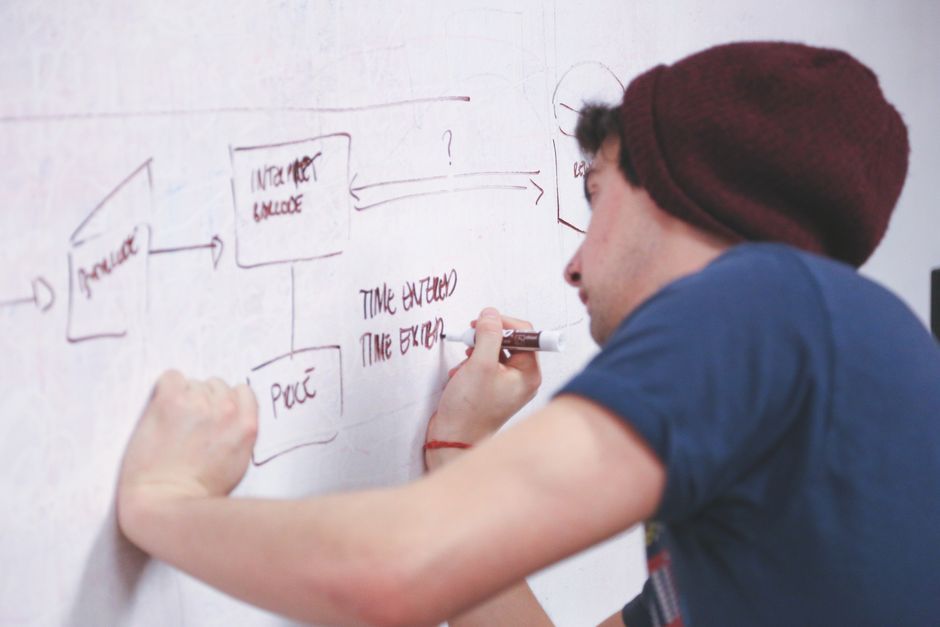
Stock photo for illustration only, not from the actual event
The first step is risk-first thinking. Instead of listing features, list every factor that could render the entire project impossible, then select the most daunting one. Barry Boehm's foundational 1988 paper on the spiral model described a risk-driven approach to software processes rather than a document-driven or code-driven methodology.
Prioritizing architectural risks upfront protects engineering teams from wasting extensive hours on peripheral features before validating core technological feasibility.
The second step involves writing clear success criteria and exit thresholds before any development begins. This forces honesty into the evaluation by establishing specific pass conditions, fail thresholds, and quality constraints. As AWS notes, translating high-level business objectives into measurable metrics prevents poor performance from driving sunk-cost fallacies.
"Too often, PoCs are treated as technical demos that are designed to impress rather than as rigorous experiments that are designed to promote learning."
AWS Prescriptive Guidance
The third step is setting strict time-boxes, as an open-ended proof of concept inevitably drifts into an unstructured project. Extreme Programming references short experimental spikes designed to resolve tough technical problems within a bounded timeframe. The fourth step focuses on building the thinnest slice that touches the core risk, avoiding polished user interfaces unless the interface itself is the primary variable.
The fifth step mandates using realistic data formats without exposing sensitive customer records, referencing GitGuardian's State of Secrets Sprawl 2026 report which tracked 28.65 million new hardcoded secrets in public GitHub commits during 2025. The final step measures outcomes against pre-established thresholds to decide whether to pivot, end, or scale the project.
Source: Dev.to
Found something wrong in this article? Report an issue with this article
Comments
Leave a Comment