

Math 2.0: Terence Tao Turns Vision Into AI Tools
Terence Tao and Caltech researchers published a 120-page Math 2.0 PDF on June 1, 2026, featuring python and docker stacks.

Stock photo for illustration only, not from the actual event
- Terence Tao and Caltech researchers published a 120-page Math 2.0 document on June 1, 2026.
- Introduces the math2py Python package, Jupyter notebooks, and a REST API for LLM integration.
- Enables automated mathematical compliance checks inside CI pipelines for DevOps and AI teams.
- Provides a self-hosted Docker-Compose setup suitable for GDPR-restricted workloads.
On June 1, 2026, Terence Tao, together with a team of Caltech researchers, published a 120-page PDF titled "Math 2.0". The document is much more than a mere philosophical essay; it outlines a concrete, open-source stack that blends formal mathematics, symbolic computation, and large language models (LLMs) to establish a machine-readable mathematics layer. Specifically, it ships a Python package called math2py, a set of Jupyter notebooks, and a REST API enabling developers to query mathematical objects like theorems, proofs, and definitions as first-class data.
As AI engineers, we constantly struggle against two opposing forces: the rigorous symbolic precision of mathematics and the probabilistic, flexible nature of modern machine learning models. Math 2.0 bridges that exact gap. By exposing a formal knowledge graph of mathematics that LLMs can query, it hands us a robust mechanism to streamline operations.
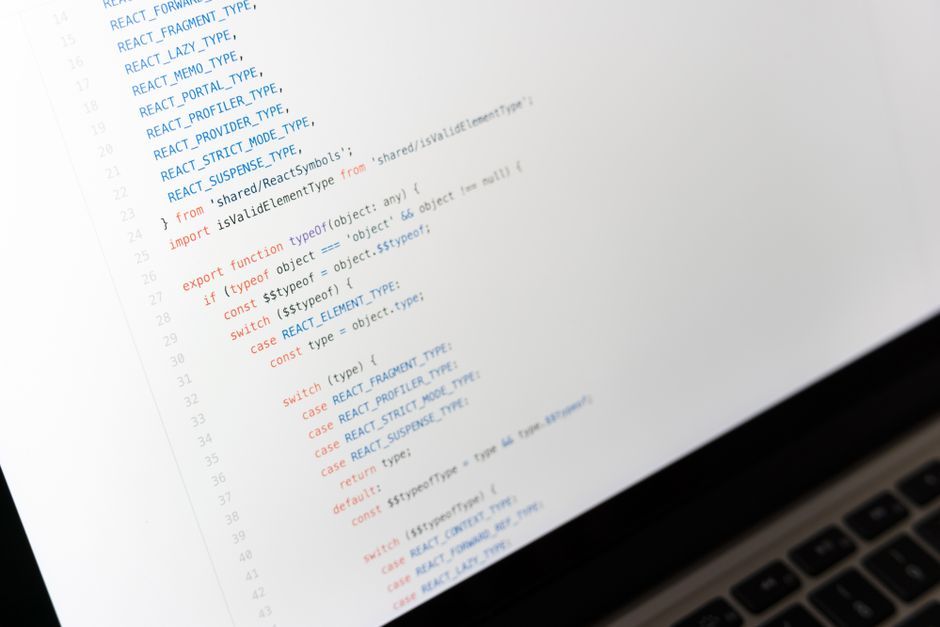
Stock photo for illustration only, not from the actual event
For DevOps and AI-infrastructure teams, this signifies the ability to bake mathematical compliance checks directly into continuous integration pipelines, turning a previously manual review step into an automated test. Getting started requires a basic setup with Python 3.11+ and Docker:
- Install the package inside your project virtualenv using
pip install math2py==0.3.0. - Initialize the
MathClientwith your API token to fetch specific theorem statements, such as the Banach Fixed-Point Theorem. - Validate symbolic derivations to ensure contraction maps satisfy required hypotheses.
Integrating formal mathematics directly into automated CI/CD pipelines marks a major paradigm shift for safety-critical AI systems. Historically, verifying that a machine learning model's loss function adheres to complex mathematical inequalities relied entirely on manual code reviews, which are prone to human oversight. Transforming theorems into actionable assets helps bridge the gap between academic theory and production software engineering.
For organizations requiring self-hosted deployments due to strict regulatory frameworks such as GDPR-restricted workloads, the PDF includes a ready-to-use Docker-Compose configuration. Teams can extract the package, spin up the container, and mount the service behind their existing API gateways effortlessly.
"Math 2.0 feels like the missing glue between the symbolic world of mathematics and the operational world of CI/CD."
Naveen Malothu
Source: Dev.to
Found something wrong in this article? Report an issue with this article
Comments
Leave a Comment