

High-speed video reveals how honey bee stingers pump venom
High-speed video footage reveals the mechanics of honey bee stingers, showing how unique valve geometry acts as collapsible pistons to deliver venom.

Stock photo for illustration only, not from the actual event
- Researchers used high-speed video to record honey bee stinger mechanics.
- Bee stingers feature unique geometric valves acting as collapsible pistons.
- This mechanism efficiently delivers venom into targets during a sting.
- The findings offer deeper insight into insect defensive biology.
Research into insect physiology has reached a new milestone as a team of scientists utilized high-speed video technology to capture the operational mechanics of honey bee stingers. The resulting observational data successfully unravels a key mystery regarding how these insects deliver venom into targets with extreme precision and speed, operating far more complexly than previously understood.
Details from the footage reveal that the critical component enabling this smooth operation is the unique geometric shape of the valves inside the stinger. The research team noted that these structures function much like collapsible pistons that expand and contract alternately, resembling a miniature hydraulic pump system.
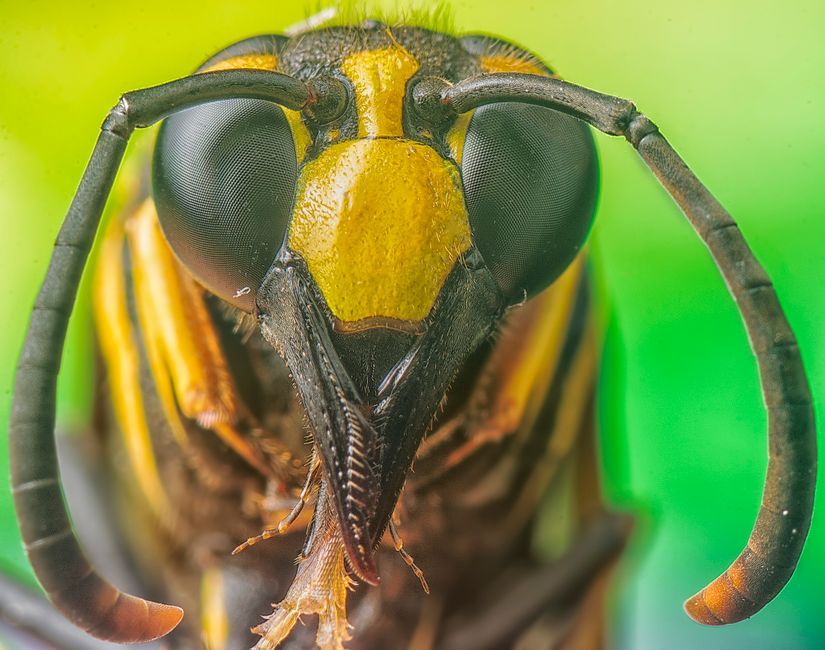
Stock photo for illustration only, not from the actual event
This discovery of biomechanical mechanics is profoundly significant as it shifts the scientific community's perspective on insect defensive organs. Moving beyond the view of a simple sharp needle, it highlights a highly sophisticated natural hydraulic pumping system that could potentially inspire future developments in medical devices or micro-injection needles.
“The unique geometry of the valves is the key; they act as collapsible pistons to deliver venom.”
Co-author
This double-piston system allows bees to continuously pump venom from their glands and inject it into a victim's skin, even after the stinger has detached from the insect's body. Such a structure reflects the remarkable evolutionary adaptation of insects to protect their nests and colonies from larger threats.
This study not only provides fresh knowledge regarding honey bee biology but also opens doors for deeper investigations into similar anatomical mechanisms found in wasps and hornets. Scientists hope to leverage these findings for future entomological research and biomimetic innovations.
Source: Ars Technica
Found something wrong in this article? Report an issue with this article
Comments
Leave a Comment