

Armosi Masterplan: Unifying Thessaloniki's Historic Sites
Apostolopoulos Tasoulis presents the Armosi masterplan to unify over 70 monuments and archaeological sites in Thessaloniki, Greece.

Stock photo for illustration only, not from the actual event
- Armosi masterplan designed by Apostolopoulos Tasoulis for Thessaloniki
- Connects over 70 monuments and archaeological sites across the city
- Uses a unified palette with light-colored paving and neutral street furniture
- Integrates public transport networks and continuous green corridors
Architectural studio Apostolopoulos Tasoulis has introduced the Armosi (Άρμοση) masterplan, establishing an expandable urban network designed to unify more than 70 monuments and archaeological sites across Thessaloniki, Greece, guided by UNESCO's Historic Urban Landscape approach.
Structured along the historic Egnatia Street axis and its intersection with Aristotelous Street, the framework weaves Roman, Byzantine, Ottoman, Jewish, and modern historical layers into a cohesive public landscape while enhancing urban legibility without adding visual clutter.
To achieve this, the studio applies a unified design toolkit featuring a continuous, light-colored paved surface that creates a neutral backdrop, complemented by standardized lighting, discreet signage, and streamlined street furniture.
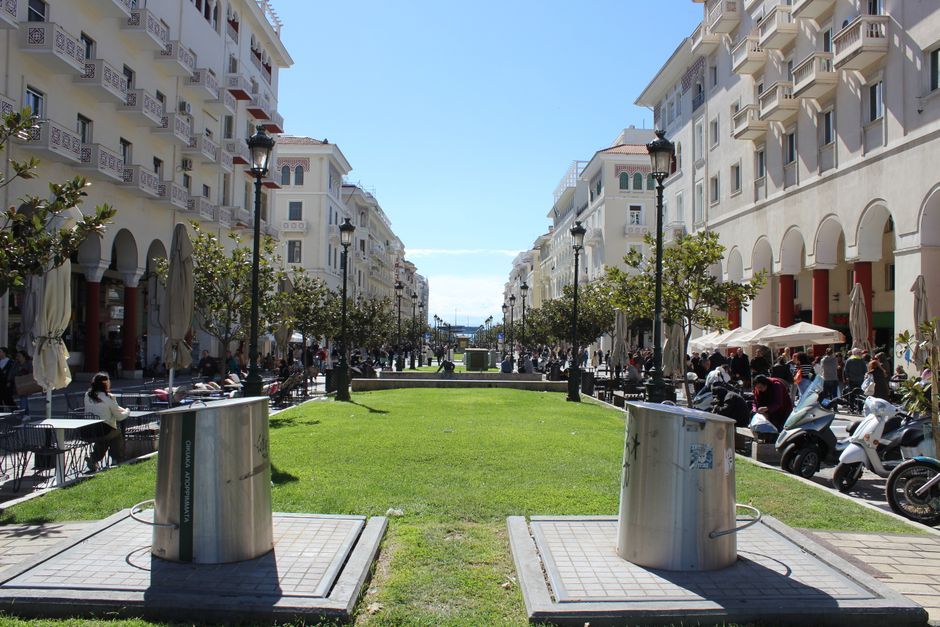
Stock photo for illustration only, not from the actual event
Targeted interventions include restoring the historic imperial axis at the Rotunda and Galerian Complex, alongside introducing a new axial entry at Dikastirion Square to reconnect the Roman Forum with the contemporary city fabric.
The Armosi masterplan exemplifies a modern urban design philosophy where historical strata are not isolated as museum pieces but actively integrated into daily urban mobility. By adopting UNESCO's landscape approach, the project bridges heritage conservation with contemporary infrastructure needs.
Pedestrian circulation and climate resilience heavily dictate the ground plane design, expanding existing vegetation into continuous green corridors linked directly to the city's metro and public transport networks to establish traffic-calmed routes.
The project was developed following a competition organized by Anaplasi consulting engineers SA in partnership with the Ministry of Culture and the Municipality of Thessaloniki, featuring a multidisciplinary team led by Apostolopoulos Tasoulis.
Source: designboom
Found something wrong in this article? Report an issue with this article
Comments
Leave a Comment