

Musée d’Orsay 2026: Jenny Holzer's J’ai Vu Exhibition
American artist Jenny Holzer transforms Paris's Musée d’Orsay with monumental light projections and engraved stone sculptures for J’ai Vu, running Oct 2026.

Stock photo for illustration only, not from the actual event
- Jenny Holzer presents the J’ai Vu exhibition at Paris's Musée d’Orsay from Oct 20, 2026, to Feb 21, 2027.
- Exterior projections named ÉCLAIRÉ feature around 250 excerpts by 34 authors on the museum facade.
- Interior installations include 19 engraved stone sculptures, LED displays, and metallic paintings.
- The project compiles over 750 distinct texts from 424 sources and 73 authors.
Paris’s Musée d’Orsay is set for a profound transformation as American conceptual artist Jenny Holzer takes over the historic space with a sweeping exhibition titled J’ai Vu (I Saw), running from October 20, 2026, to February 21, 2027. Developed in collaboration with the museum, the exhibition delves deep into the archives of the former railway station to unearth historical conflicts, contradictions, and uncomfortable truths. By bringing together artistic correspondence, political commentary, and historical records, Holzer creates a powerful dialogue where 19th-century voices directly confront the modern era.
The large-scale intervention begins outdoors on the museum’s Seine-facing facade, which serves as a massive canvas for ÉCLAIRÉ—a series of monumental light projections running from October 18 to 22 between 7 pm and 11 pm. Drawing on approximately 250 excerpts by 34 authors, including literary giants like Vincent van Gogh, Paul Cézanne, Gustave Flaubert, and Émile Zola, Holzer covers the historic architecture in glowing text. Passersby along the riverbanks can freely experience the rolling letters, literary passages, and political reflections as they temporarily turn one of Paris's most iconic cultural landmarks into an open-air display of living history.
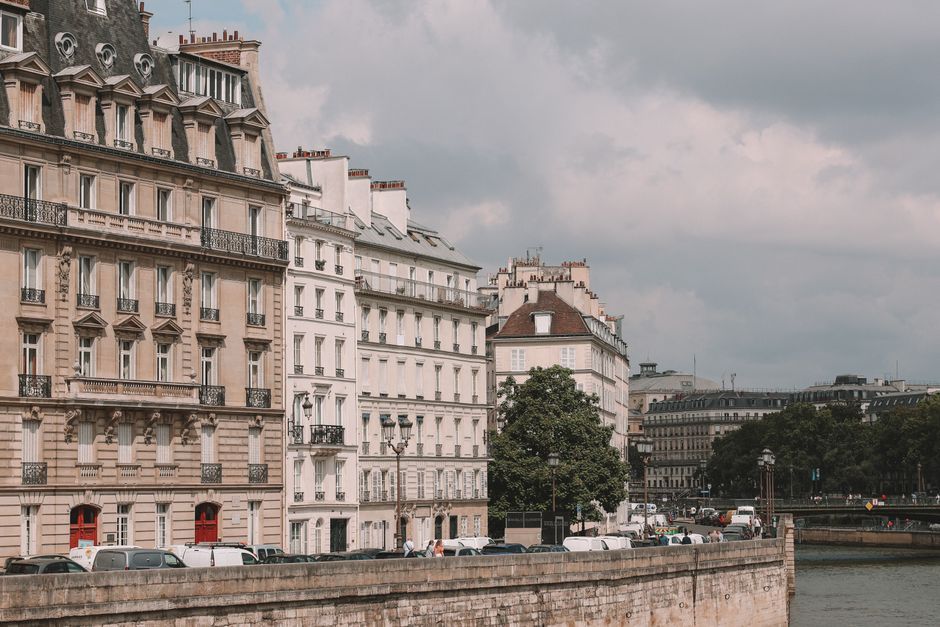
Stock photo for illustration only, not from the actual event
Inside the Musée d’Orsay, a monumental, site-specific LED installation guides visitors through four distinct galleries dedicated to history painting, naturalism, symbolism, and Gustave Courbet. Streams of brightly colored text flow through the halls, injecting historical voices into rooms traditionally dominated by traditional paintings and sculptures. This glowing installation responds directly to the building's architecture and visitor pathways, subtly echoing the structure's original 19th-century function as the bustling Gare d’Orsay—once a hub for transporting passengers, now moving words instead.
In addition to the dynamic light displays, Holzer introduces 19 stone sculptures, consisting of 17 benches and two columns, distributed across the museum’s ground-floor galleries and public areas. Crafted specifically for the exhibition, these works feature engraved inscriptions mostly dating from 1848 to 1914. Each stone variety was thoroughly researched for its origin and character to establish a tangible material dialogue with the museum's existing collection of sculptures and pedestals, inviting visitors to slow down and engage in a deeper reading of history.
"History, it seems, has never been particularly good at keeping quiet."
Jenny Holzer
The exhibition takes a distinctly political turn inside the history painting gallery, where Holzer has curated a new presentation centered around war and conflict. Historical works from the permanent collection are paired with her own metallic paintings crafted from gold, platinum, and palladium leaf, referencing recent international conflicts. Based on partially redacted government and historical documents, these reflective surfaces obscure substantial portions of their original text, leaving visible fragments that question secrecy, accountability, and the boundaries of transparency.
Jenny Holzer's intervention at the Musée d’Orsay highlights the enduring power of merging contemporary conceptual art with classical institutional spaces. By utilizing the framework of a former 19th-century railway station turned impressionist museum, the exhibition emphasizes how history is never static. Instead, it demonstrates how past political anxieties, labor movements, and societal conflicts continue to mirror contemporary global challenges, encouraging viewers to question official narratives through text and light.
Altogether, J’ai Vu brings together more than 750 distinct texts from 424 sources and 73 authors, making it one of Holzer’s most expansive text-based projects for a single exhibition. Covering themes from the Franco-Prussian War and the Paris Commune to colonialism, anarchism, and military corruption, the exhibition runs from October 20, 2026, to February 21, 2027, in Paris, France.
Source: designboom
Found something wrong in this article? Report an issue with this article
Comments
Leave a Comment