

El Niño 2026: 5 Ways Weather is Impacted Globally
Discover 5 major global impacts of the intensifying El Niño, ranging from severe wildfires in Indonesia to active Pacific hurricanes and weaker monsoons.

Stock photo for illustration only, not from the actual event
- El Niño has strengthened and is projected to persist until at least 2027, according to the WMO.
- Indonesia battles its worst wildfire season since 2015, burning over 895,657 hectares of land.
- The eastern Pacific experiences an unusually active hurricane and tropical storm season.
- India's essential monsoon rainfall drops 13% below average, triggering severe droughts.
The El Niño phenomenon has been strengthening for several months now and is already exerting a significant impact on global weather patterns. Countries including Indonesia, India, and the United States have been experiencing droughts, floods, and heatwaves that align closely with projections regarding extreme weather events being supercharged by the phenomenon.
The World Meteorological Organization (WMO) states that this record-breaking El Niño will strengthen further and persist until at least 2027. The world is already feeling its impact through five distinct weather disruptions.
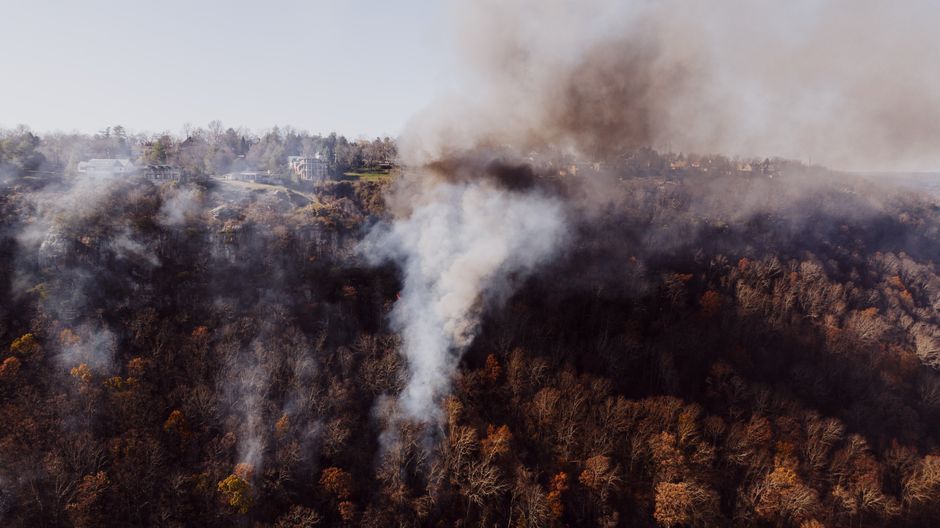
Stock photo for illustration only, not from the actual event
1. Severe Wildfire Crisis in Indonesia
Indonesia, which typically trends drier and hotter during El Niño years, is currently battling its worst wildfire season since 2015. Since January of this year, at least 895,657 hectares of land—nearly six times the size of Greater London—have been burned, representing more than twice the area burned during the previous year without El Niño's influence.
These devastating fires have forced school closures and driven up hospital admissions across the country. Millions of people residing in Sumatra and Kalimantan have been exposed to toxic haze, with approximately 175,000 individuals suffering from respiratory illnesses. More than 40,000 of these cases—ranging from coughs and bronchitis to serious conditions like pneumonia—involve toddlers.
2. An Exceptionally Active Eastern Pacific Hurricane Season
In the eastern Pacific, where El Niño tends to boost hurricane activity, the season has been remarkably active so far. There have been 22 named storms and 12 hurricanes, including 10 major hurricanes, surpassing the typical total of an entire average season with two months still remaining until its end.
Higher ocean temperatures and weaker high-altitude winds driven by El Niño have provided ideal ingredients for storms to gain strength rapidly. Hurricane Polo is a prime example, experiencing rapid intensification with wind gusts reaching 180 mph (285 kmh). Furthermore, September witnessed three simultaneous hurricanes—Lowell, Karina, and Marie—churning in the central and eastern Pacific at the same time, marking the first occurrence of its kind since 2015.
Context Note: El Niño alters Pacific Ocean temperatures directly, releasing vast thermal energy into the atmosphere that enables tropical cyclones to absorb energy and intensify rapidly. This contrasts sharply with the Atlantic Ocean, where El Niño typically increases wind shear, a factor that tears apart developing storm systems.
3. An Eerily Quiet Atlantic Ocean
Conversely, the Atlantic Ocean has remained remarkably calm. El Niño tends to increase wind shear across the north Atlantic, which tears apart developing storms and restricts their formation. Only one hurricane, Isaias, has made landfall in the Florida Panhandle and Alabama, marking the latest-forming hurricane on record in the satellite era dating back to the 1960s.
4. Below-Average Monsoon Rainfall in India
The warmer and drier trend has also taken firm hold in India, where essential monsoon rainfall has dropped 13% below average. While Central India received near-normal rainfall, the eastern and north-eastern regions were roughly 26% drier than average and entered 'exceptional' drought. Southern states experienced rainfall 24% below average. Even where totals were near normal, precipitation fell erratically, alternating between prolonged dry spells and extreme downpours, placing additional stress on agricultural yields.

Stock photo for illustration only, not from the actual event
5. Intensified Typhoons in East Asia
Further west in the Pacific, eastern China and Japan have experienced an active season as storms such as Maysak and Dujuan brought widespread flooding and landslides. According to the Japanese Meteorological Agency, 10 tropical cyclones formed in the western Pacific, marking the highest count in a single season since 1966. Modified wind patterns during El Niño cause cyclones to form further east, allowing them a longer distance and more time over warm waters to gather energy before making landfall.
Source: BBC Science & Environment
Found something wrong in this article? Report an issue with this article
Comments
Leave a Comment