

Yemen Newborn Twins Fight for Survival Amid Severe Malnutrition
Seven-week-old Yemeni twins Raghad and Raad battle severe acute malnutrition as civil war displaces families and spikes food prices.

Stock photo for illustration only, not from the actual event
- Seven-week-old Yemeni twins Raghad and Raad face severe acute malnutrition amid ongoing civil war.
- The family fled on foot for three days from Kahboub mountains escaping airstrikes and drone attacks.
- The United Nations reports over 250,000 displaced and 800,000 cut off from lifesaving aid.
- Al-Sadaqah hospital in Aden struggles with severe resource shortages, admitting only critical cases.
Ever since they were born just seven weeks ago, twin babies Raghad Hassan and her brother Raad have been locked in a fierce struggle for survival. They entered the world prematurely as intense fighting surged in Yemen's protracted civil war opposing Houthi rebel fighters and government forces.
When Houthi forces advanced into their village located in the Kahboub mountains of south-west Yemen, their family of seven was forced to flee amidst bombs, missiles, and drone strikes, with the newborn twins shielded only by basic blankets. What followed was an arduous three-day journey on foot heading toward the port city of Aden.
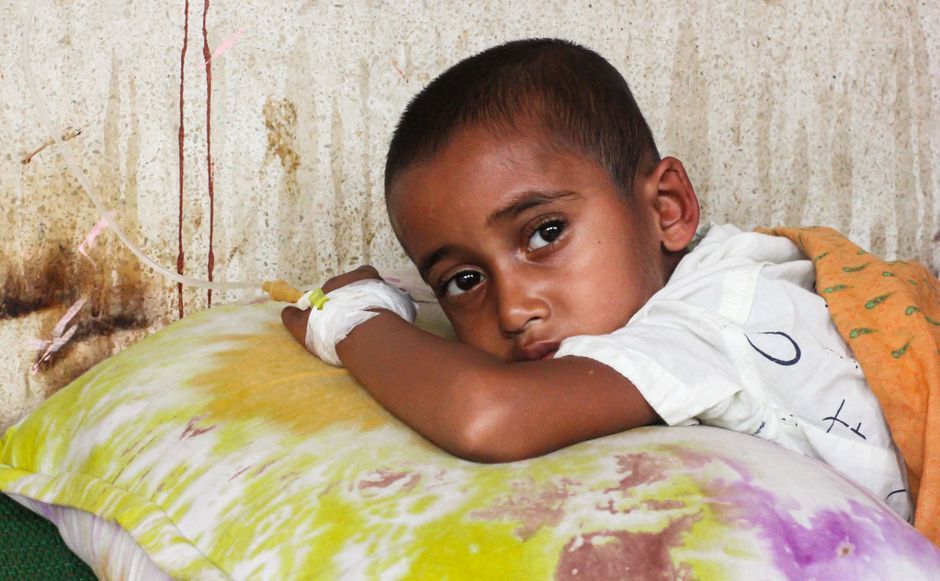
Stock photo for illustration only, not from the actual event
Recounting the ordeal, their mother Lina explained that the twins grew progressively weaker during the trek due to biting cold and swirling dust, while their vomiting and diarrhea worsened. By the time the newly homeless family finally reached al-Sadaqah hospital in Aden, the twins were barely clinging to life, prompting a doctor to shake his head at their wasted, skin-and-bone limbs.
Raad was in a more critical condition, his ribs prominently visible and his chest heaving with rapid, shallow breaths. He was scarcely larger than the hands of the nurse who gently carried him to be weighed and measured. Their father Bajash looked on with deep worry, explaining that he could only feed the twins twice a day or sometimes resort to giving them water alone after the war drove baby milk prices out of reach. Doctors quickly diagnosed the infants with severe acute malnutrition, a condition as lethal as a bullet.
"They were exhausted… there was cold and dust. Their vomiting and diarrhoea got worse."
Lina, Mother of the Twins
The hunger crisis in Yemen represents a crisis within a broader crisis, serving as another devastating frontline in the civil war. The United Nations states that approximately 800,000 individuals can no longer receive lifesaving aid, while over 250,000 have been displaced following the collapse of an informal ceasefire over the summer. Since then, Houthi forces have advanced rapidly along the Red Sea coast and entirely cut off Yemen's third-largest city, Taiz, leaving civilians at grave risk due to skyrocketing food prices.
The hunger crisis unfolding in Yemen is not merely a consequence of natural scarcity but the direct result of systemic infrastructure destruction and supply chain blockades driven by a prolonged civil war. When soaring conflict-induced prices put basic infant formula out of reach for ordinary families, it highlights how food insecurity functions as a silent weapon that devastates civilian populations long after battles conclude.
While the internationally recognized government attempts to counter the offensive with support from Saudi airstrikes, fathers like Bajash are left fighting desperately to secure medical assistance for their children. Bajash navigated hospital corridors to obtain crucial admission slips, eventually finding an ally in a dedicated supervising nurse, Aisha Ragab, who herself fled the war in 2018 and arranged for the twins to share a single bed.
Although the malnutrition unit features 22 beds, staff noted that only 13 patients are admitted at any given time due to severe shortages in international funding, staff, and medical equipment. Dr. Noor Mohammed expressed the heavy emotional toll of treating families who rely entirely on the hospital without money or insurance, while Bajash and his three other young children were forced to spend the night sleeping on the street outside after losing their flock and livelihood to the war.
Source: BBC World
Found something wrong in this article? Report an issue with this article
Comments
Leave a Comment