

Student Movement Challenges Serbia's Vučić in Tight Vote
Serbia's parliamentary election turns into a nail-biting race as student-led movement The Student List challenges longtime leader Aleksandar Vučić.

Stock photo for illustration only, not from the actual event
- The Student List movement has put forward 250 candidates for Serbia's parliamentary election.
- The election follows prolonged anti-corruption protests sparked by the Novi Sad railway station canopy collapse.
- Aleksandar Vučić stepped down as president to run for prime minister in these snap elections.
- Analysts and reliable polls predict an exceptionally tight race between the two factions.
Sunday's parliamentary elections in Serbia have shaped up into a fierce political battle, featuring cardiologist and Novi Sad University professor Ilija Srdanović as a leading opposition figure. Arriving for an interview on a motorcycle while wearing a fluorescent yellow jacket adorned with pro-student slogans, Srdanović represents an unusual challenger to long-serving leader Aleksandar Vučić, whose Serbian Progressive Party (SNS) has held power since 2012.
The Student List emerged from nearly two years of anti-corruption demonstrations led by young Serbians, who were outraged by the deaths of 16 people when a concrete canopy collapsed at the railway station in Novi Sad, Serbia's second-largest city. Rather than running for office themselves, student assemblies across university faculties selected 250 candidates to contest the parliamentary seats, placing Srdanović at the head of the list.
Stock photo for illustration only, not from the actual event
Standing in their way is Aleksandar Vučić, who has successively served as deputy prime minister, prime minister, and president since 2012. After calling snap elections last month, he stepped down from the presidency to run once again for the office of prime minister. Despite shifting titles, Vučić remains firmly in control, bolstered by state-aligned media and a significant portion of the population who view him as a strong leader responsible for economic growth and infrastructure improvements.
"We offer to our citizens the core values of civilised society, which this previous regime has taken away from our citizens for the last time."
Ilija Srdanović
Unlike traditional political entities, the Student List operates without a strict hierarchy or a designated leader. Its candidates range from academics and athletes to economists and engineers, none of whom possess a political background. The students who chose them argue that this lack of political history is a major strength, as these candidates share a unified vision of a country where free speech prevails and citizens can walk home safely at night without fear of hooligans.
The rise of this decentralized student movement in Serbia highlights deep public frustration with entrenched political monopolies. By avoiding a single charismatic leader, the opposition has created a collective front that is difficult for the ruling establishment to target or discredit. Furthermore, infrastructure safety and accountability have transformed from localized grievances into national catalysts for youth political engagement, marking a distinct shift in the country's modern democratic trajectory.
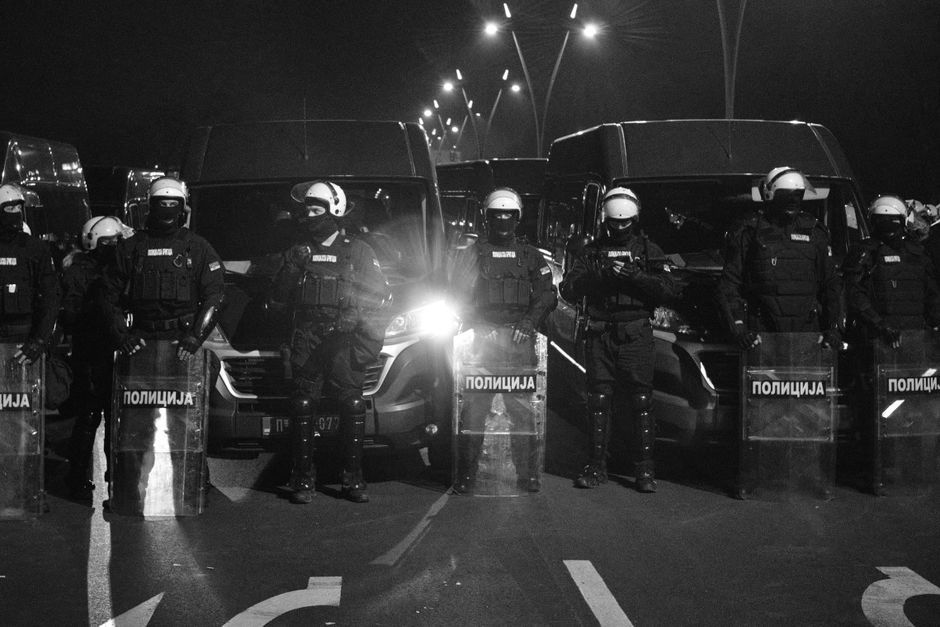
Stock photo for illustration only, not from the actual event
Vučić's greatest political vulnerability remains the tragedy at the Novi Sad railway station. Because the station's renovation was tied to his flagship infrastructure project—the high-speed railway linking Belgrade and Budapest—he has struggled to distance himself from the disaster. Magda Anastasijevic, Eastern Europe analyst for ACLED, noted that while Vučić has historically managed to survive crises by finding scapegoats, the canopy collapse proved impossible to deflect in the same manner.
As the campaign concluded, the contrasting strategies of both sides were starkly visible. While the SNS held an event at the Belgrade Arena featuring Vučić as the sole speaker, the Student List drew an estimated 150,000 people to Slavija Square across the Sava River to hear speeches from students and candidates alike. With the electorate forced to choose between centralized strongman politics and a collective movement, the final outcome remains delicately balanced.
Source: BBC World
Found something wrong in this article? Report an issue with this article
Comments
Leave a Comment