

BOI 25-Year Strategy: Driving Thailand to Made-in-Thailand Chips
Thailand's BOI launches a 25-year roadmap (2026-2050) to shift from assembly base to a complete semiconductor supply chain, aiming for its first wafer fab by 2030.

Stock photo for illustration only, not from the actual event
- Thailand targets a 25-year semiconductor transformation (2026-2050) toward Made-in-Thailand Chips
- BOI plans to establish the first commercial silicon wafer fabrication plant by 2030 using Legacy Node technology
- The three-phase development aims for an industry revenue of $150 billion by 2050
- Focuses on three main product groups: Optical Components, Power Electronics, and Sensors & IoT
In 2025, Thailand's electronics exports reached 2.4 trillion baht, accounting for nearly a quarter of the country's total exports, with semiconductor products valued at 451 billion baht. Despite this impressive export volume, the underlying industry structure shows that Thailand is not yet a player across all stages of the semiconductor supply chain. Most production bases remain heavily concentrated in outsourced semiconductor assembly and test (OSAT) services for foreign corporations. Meanwhile, higher-value upstream activities such as IC design, wafer fabrication, and intellectual property (IP) ownership remain relatively limited within the country.
To address this structural gap, the Thailand Board of Investment (BOI) has introduced the National Semiconductor and Advanced Electronics Strategy, a 25-year long-term master plan spanning from 2026 to 2050. The core objective goes beyond merely attracting foreign corporations to build assembly plants; instead, it seeks to elevate the industry into a more integrated supply chain while nurturing local Thai companies capable of developing and owning their proprietary technologies, ultimately driving toward the 'Made-in-Thailand Chips' vision that can compete globally.
Producing a single semiconductor chip involves multiple critical stages, ranging from integrated circuit (IC) design and front-end wafer fabrication to back-end packaging and quality testing. Data from 2026 indicates that Thailand hosts 20 conventional back-end facilities and 361 advanced electronics companies, but only 5 chip design firms and zero commercial silicon wafer fabrication plants. Consequently, the BOI's strategy pursues a dual-track approach: upgrading existing assembly operations into advanced packaging while actively attracting investments in chip design and wafer manufacturing, with a target to launch the country's first commercial wafer fab by 2030.
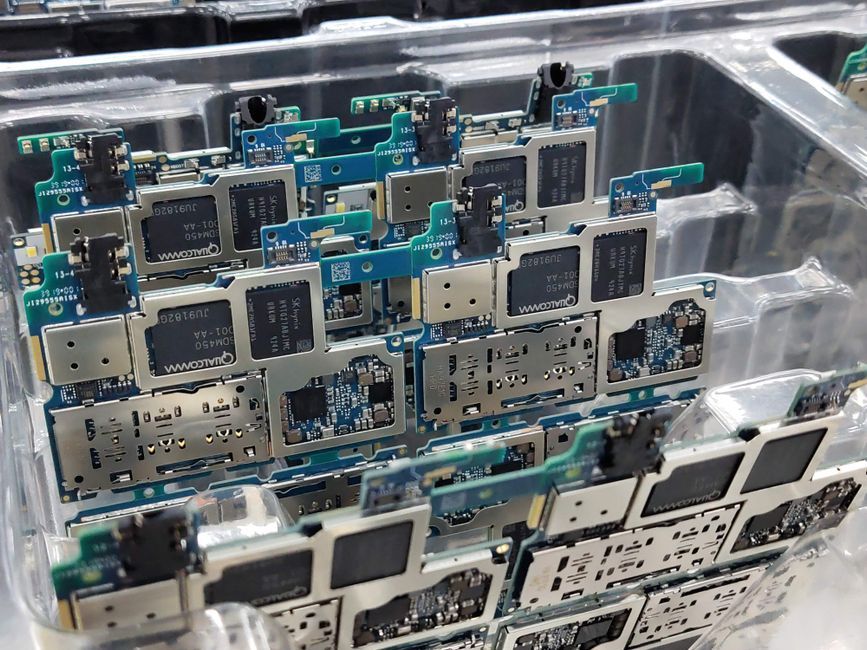
Stock photo for illustration only, not from the actual event
The planned initial wafer plant will not target cutting-edge node technologies, but will instead commence operations using mature legacy nodes. A vast majority of chips—particularly those dedicated to power systems, electric vehicles, and sensors—do not require the smallest or most advanced manufacturing processes, prioritizing stability, reliability, and cost-efficiency instead. Starting in these markets aligns well with Thailand's existing industrial foundation rather than prematurely competing in high-end processors. The BOI has structured the development plan into three distinct phases:
- Phase 1 (First 5 Years, by 2030): Focuses on expanding conventional back-end facilities from 20 to 25, establishing 2 advanced back-end sites, increasing IC design firms to 8, building the first wafer fab, generating $80 billion in industry revenue, securing $18 billion in cumulative FDI, and training 95,000 workers alongside founding National Semiconductor Training Centers (NSTCs) and upgrading TMEC.
- Phase 2 (by 2040): Expands investments into higher-value segments, targeting 15 IC design firms, 2 wafer fabs, 8 advanced back-end sites, specialized R&D centers, $110 billion in revenue, $42 billion in cumulative FDI, and 160,000 personnel.
- Phase 3 (by 2050): Fully integrates all segments from design to testing, reaching 60 design firms, 5 wafer fabs, 10 advanced back-end bases, 35 conventional back-end bases, and 700 advanced electronics companies, aiming for $150 billion in annual revenue, $80 billion in cumulative FDI, and over 230,000 new workers.
The BOI's decision to initiate production using legacy node technology represents a highly pragmatic and risk-mitigated strategy. The global demand for semiconductors in clean energy vehicles and IoT devices is surging and directly complements Thailand's established manufacturing ecosystems. Attempting to build a bleeding-edge advanced node fab from day one would require tens of billions of dollars in capital expenditure and deep expertise beyond immediate domestic capacity. Building capabilities incrementally from a solid industrial baseline offers the most rational pathway toward technological self-reliance.
Furthermore, the strategic roadmap prioritizes three specialized product groups that match national strengths: optical components and transceivers for AI data centers, Silicon Carbide (SiC) and Gallium Nitride (GaN) power electronics for electric vehicles and clean energy infrastructure, and specialized automotive and smart IoT sensors. All three segments can leverage mature manufacturing processes as a stepping stone to build domestic production capabilities.
Source: Techsauce
Found something wrong in this article? Report an issue with this article
Comments
Leave a Comment