

German Cost of Living Protests Turn Violent as Shops Looted
Cost of living protests organized by Gen Z regelt in Germany turned violent, leading to looted shops and clashes with police in Frankfurt, Berlin, Cologne, and Hamburg.

Stock photo for illustration only, not from the actual event
- Cost of living protests in Germany organized by the campaign group Gen Z regelt turned violent on Saturday evening.
- Police deployed water cannons to disperse demonstrators in Frankfurt, Berlin, Cologne, and Hamburg after fireworks, stones, and bottles were thrown at emergency workers.
- The unrest follows similar large-scale youth-led demonstrations in France involving over 320,000 participants.
- Police confirmed multiple arrests and the seizure of two weapons after a gun shop was broken into and vandalized.
Protests over the rising cost of living in Germany escalated into severe unrest late on Saturday, as rioters looted shops in central Frankfurt and clashes erupted between demonstrators and police forces across multiple German cities following largely peaceful mass demonstrations earlier in the day.
Aside from Frankfurt, which serves as Germany's financial hub, incidents of violence were also reported in Berlin, Cologne, and Hamburg. Police authorities stated that they deployed water cannons to disperse protesters who targeted emergency response workers by launching fireworks, throwing stones, and hurling glass bottles.
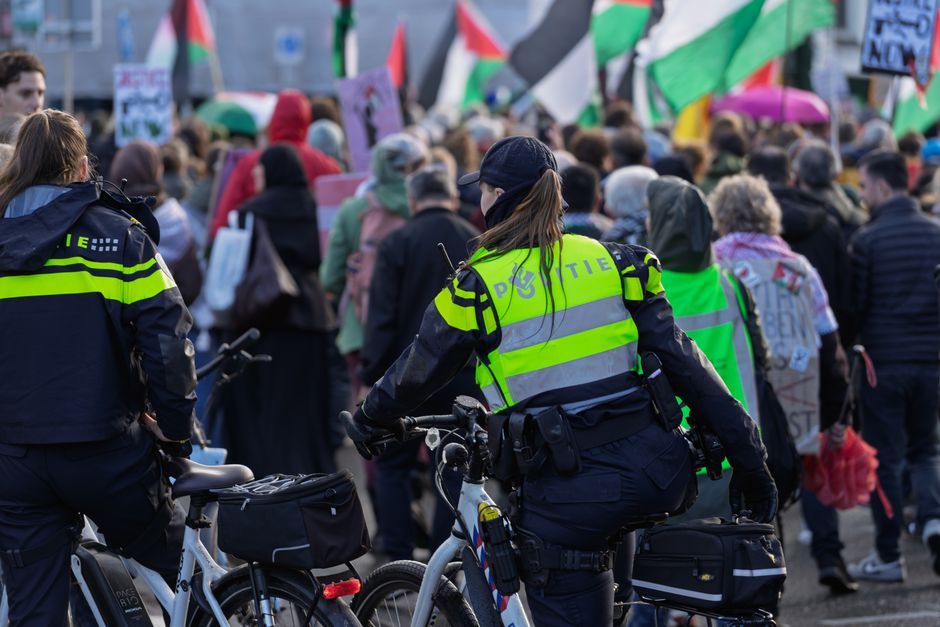
Stock photo for illustration only, not from the actual event
Thousands of participants had earlier joined the demonstrations organized by the campaign group Gen Z regelt, which translates to Gen Z takes charge, to voice their opposition against underfunded schools, soaring living costs, public spending cuts, and military service requirements.
The disturbances in Germany mirror similar youth-led mass protests in France, where more than 320,000 individuals demonstrated on Saturday as well. According to the AFP news agency, a large section of Frankfurt's primary shopping street was sealed off by police, with law enforcement confirming that numerous arrests were made in the city.
Authorities in Frankfurt, Munich, and Berlin reported a combined total of up to 18,000 protesters, representing roughly half of the estimates previously published by organizers on their website. Meanwhile, German media outlets noted that tens of thousands participated in demonstrations across various German cities on Saturday.
Lina Friedrich, a spokesperson for Gen Z regelt, explained that the demonstrations aimed to fight for peace and freedom rather than war and coercion. She emphasized that the primary concerns for the movement included enhanced support for health and education systems, opposition to compulsory military service, and a fairer distribution of economic burdens.
"What matters most to us is better support for the health and education systems. We are against compulsory military service and we are in favour of a fairer distribution of the burden."
Lina Friedrich, Gen Z regelt spokesperson
While the daytime protests remained largely peaceful, the demonstrations deteriorated into violence as night descended. In a published update on X, Frankfurt police confirmed that violent riots were unfolding in the city center, noting that shop windows had been smashed and molotov cocktails thrown at emergency personnel.
The youth-led uprisings in Germany and France highlight deep-seated socio-economic tensions across Europe, particularly regarding intergenerational inequalities and government spending priorities. When civil demonstrations fracture into property destruction and direct clashes with law enforcement, it presents significant governance challenges for authorities seeking to manage public discontent without exacerbating civil unrest.
In subsequent updates, officials reported that the windows of a gun shop were shattered and authorities seized two firearms after detaining a suspect. Poseck remarked that the troubling images of looting, burning properties, and attacks on police officers witnessed in France must not serve as a model for Germany to emulate.
Source: BBC World
Found something wrong in this article? Report an issue with this article
Comments
Leave a Comment