

Mari Nagem explores earth's crises and space dreams
Brazilian artist Mari Nagem's exhibition The Tropics, The Moon, and Mars at CUE Art in New York connects space colonization ambitions with earth's ecosystems.

Stock photo for illustration only, not from the actual event
- Mari Nagem's exhibition The Tropics, The Moon, and Mars is on display at CUE Art in New York
- Her artwork Flora Futura draws inspiration from the ESECAFLOR experiment in the Amazon rainforest
- The 41°C installation records water temperatures reaching 41 degrees Celsius in the Tefé River
- The Right To Shade project uses AI and satellite imagery to analyze urban tree distribution in Fortaleza
As humanity continues to dream of establishing settlements on Mars, Brazilian artist Mari Nagem invites viewers to rethink our relationship with planet Earth. Her artistic practice bridges the gap between our extraterrestrial ambitions and the fragile ecosystems we are struggling to preserve at home.
At New York's CUE Art, her exhibition titled The Tropics, The Moon, and Mars immerses visitors in a saturated red light that illuminates motorized sculptural branches and delicate ceramic formations. The installation mimics an unfamiliar planetary landscape while relying entirely on materials and references derived from Earth's shifting environments.
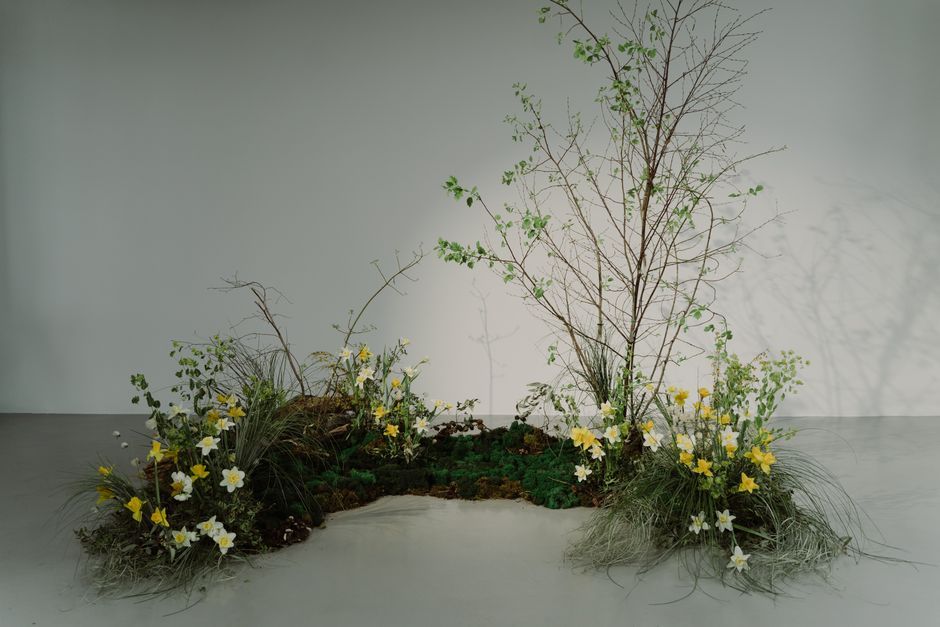
Stock photo for illustration only, not from the actual event
A central piece in her practice, Flora Futura (The Survival Dance), is informed by ESECAFLOR, a long-term scientific experiment in the Brazilian Amazon where researchers divert rainfall to study how trees cope with prolonged drought. Mounted on motorized stands, the bare branches sway slowly, capturing both the resilience and the decline of nature under climate stress.
The relationship between environmental crises and human intervention is further explored in 41°C (2025), a 43-meter-long ground painting created for the Emílio Goeldi Zoobotanical Park in Belém during COP30. Utilizing satellite imagery and thermal data, Nagem mapped the extreme water temperatures of the Tefé River during the 2023 Amazonian drought, which tragically led to the deaths of hundreds of river dolphins.
Nagem's work highlights a fundamental paradox in human innovation: our tendency to develop high-tech solutions for survival in hostile alien environments while neglecting the complex living infrastructure already sustaining life on Earth. By translating scientific data and ecological events into physical installations, her art challenges how we perceive our dependence on the natural world.
In another project titled The Right to Shade (2026), Nagem and her collaborators examined access to shade in Fortaleza, Brazil. By combining satellite imagery and AI-assisted analysis, they mapped the distribution of trees and buildings across neighborhoods, exposing how urban development often favors artificial cooling structures over natural tree canopies.
Furthermore, in Siren (2024), created alongside Leandro Lima for SFER IK Museion in Mexico, artificial intelligence was deployed to recreate the songs of extinct South American birds. Emitted through ceramic speakers shaped like nests that merge digital fabrication with traditional handcraft, the installation creates a haunting dialogue between synthetic remembrance and actual ecological loss.
Through these diverse mediums, Mari Nagem reminds us that while visions of colonizing the Moon and Mars expand, our immediate responsibility remains anchored to the species and environments we share on Earth.
Source: designboom
Found something wrong in this article? Report an issue with this article
Comments
Leave a Comment