

Won Ji Lim Translates Human Body into Glass and Cement
Artist Won Ji Lim presents Untitled, Anima-in anima, and We are living in a room series, interpreting the human body through media.
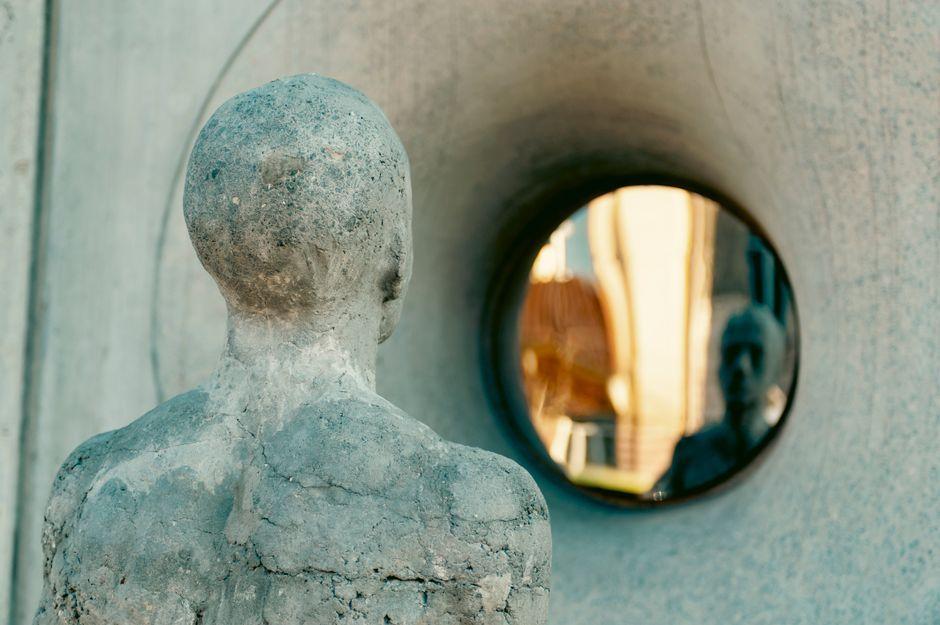
Stock photo for illustration only, not from the actual event
- Won Ji Lim creates artworks across Untitled, Anima-in anima, and We are living in a room series
- Pairs opaque cement with transparent glass to build material tension
- Uses everyday objects like sponges, stockings, and acrylic boxes in interiors
- Explores the contrast between rigid outer shells and soft interior contents
Artist Won Ji Lim translates the physical logic of the human body into an abstract sculptural vocabulary through her Untitled, Anima-in anima, and We are living in a room series. Her earlier practice began with an interest in qualities like uprightness and bilateral symmetry, treating the body not as a mere image to reproduce, but as a system that could be broken down, rearranged, and translated into form. In the Untitled series, recognizable anatomy gives way to controlled compositions structured through proportion, verticality, and balance.
Material choices push the sculptures even further from direct representation. Won Ji pairs opaque cement with transparent glass, utilizing their opposing densities, weights, and degrees of visibility to build tension within each work. Both materials are shaped through casting, while glass is also melted and reformed in the kiln, allowing the artist to work with a substance shifting between rigid and fluid states. Color deliberately avoids anatomical associations, letting the pieces stand entirely on their own sculptural terms.
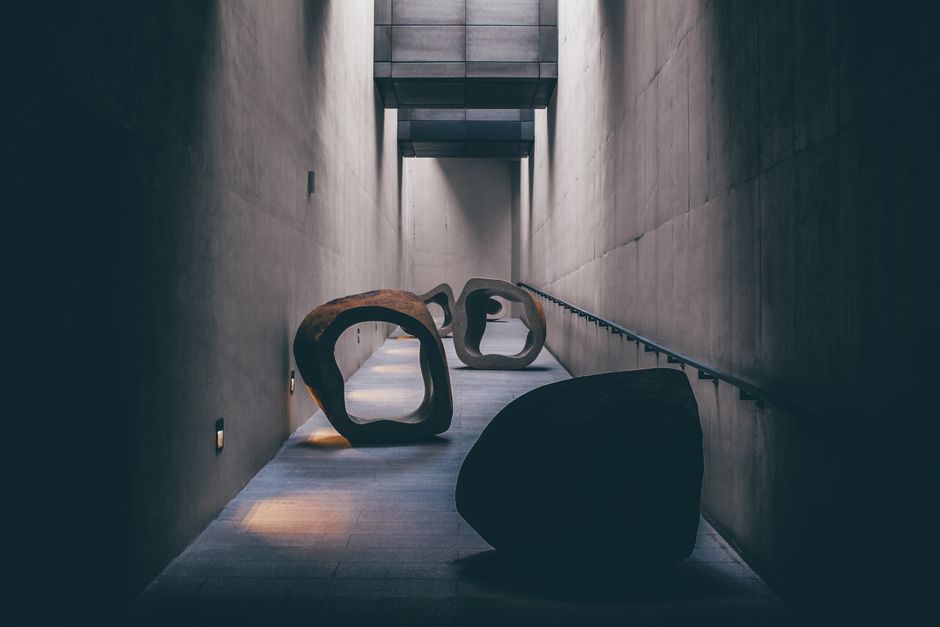
Stock photo for illustration only, not from the actual event
As her practice developed, Won Ji's focus shifted from the body's overall silhouette toward the relationship between its exterior and interior. This contrast forms the core of Anima-in anima and We are living in a room, where rigid outer shells meet softer, less predictable contents. Instead of turning to anatomical materials, the artist looks to ordinary objects capable of carrying those exact physical qualities.
Using everyday objects like sponges and glass bottles within contemporary sculpture ties into the Post-Minimalist tradition, where artists reduce complex forms to fundamental materials to prompt viewers to interpret meaning through tactile engagement rather than fixed figurative representations.
Glass bottles and acrylic boxes suggest protective, defined structures, while stockings, sponges, foam, cotton, yarn, bubble wrap, acoustic panels, and aqua sticks occupy interiors with a distinct presence. Softness presses against rigidity, transparent surfaces reveal hidden depths, and familiar household materials feel unexpectedly bodily. Nothing strictly resembles an organ or a limb, yet the psychological associations remain difficult to shake.
Across all three series, Won Ji employs casting, stacking, containing, assembling, and juxtaposing to reconstruct bodily qualities without illustrating the body itself. Symmetry transforms into an arrangement of objects, transparency implies an exposed interior, and density stands in for physical mass. The resulting sculptures operate somewhere between formal studies and quiet psychological objects.
The body remains a point of departure rather than a final destination. By translating rigidity, softness, interiority, and balance into glass, cement, and found materials, Won Ji Lim creates sculptures asking viewers to recognize physical sensations without an obvious figure attached. A bottle remains a bottle and foam remains foam, yet assembled together, they behave like something rather more alive. The project features works by artist Won Ji Lim from the Untitled, Anima-in anima, and We are living in a room series.
Source: designboom
Found something wrong in this article? Report an issue with this article
Comments
Leave a Comment