

Lyft and Baidu enter London’s robotaxi battleground as testing begins
Chinese tech giant Baidu has begun testing autonomous vehicles in London through its partnership with Lyft and Freenow, targeting a 2027 public rollout.
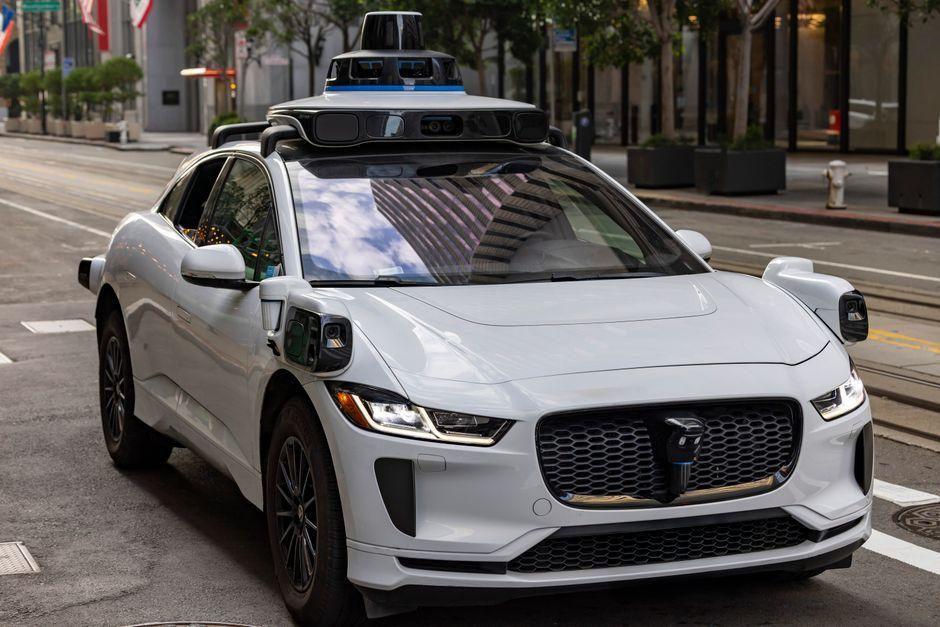
Stock photo for illustration only, not from the actual event
- Baidu has started autonomous vehicle testing in London via a partnership with Lyft and Freenow.
- Testing kicked off on Tuesday utilizing human safety operators behind the wheel.
- The companies expect to invite the public to hail their robotaxis in 2027, pending regulatory approval.
- Dozens of test vehicles are currently operating within London's borough of Brent.
The race for dominance in London's robotaxi sector is heating up as Chinese tech giant Baidu officially commences autonomous vehicle testing on public roads. This milestone deployment is part of a broader strategic alliance involving Lyft and Freenow, the German taxi and multi-mobility application recently acquired by Lyft.
Testing commenced on Tuesday with human safety operators stationed inside the vehicles. This development arrives roughly one year after the two corporations forged an alliance to roll out Baidu's specialized Apollo Go RT6 robotaxis across prominent European territories via the Lyft framework. These autonomous cars will eventually integrate into the Freenow application, which Lyft acquired in 2025 for an investment of approximately $197 million.
That acquisition provided Lyft with an essential gateway into Europe's ride-hailing market, where multiple heavily funded enterprises are actively competing to capture the robotaxi market first.
London specifically is rapidly transforming into a primary competitive arena within the region. Back in April, Waymo initiated autonomous vehicle testing accompanied by human safety operators within the city limits. Meanwhile, Uber and its autonomous driving technology collaborator, Wayve, also revealed intentions to introduce a robotaxi service in London during the current year, offering an initial interest list for customers before transitioning to fully driverless operations.
Stock photo for illustration only, not from the actual event
Representatives for Baidu and Freenow by Lyft stated they anticipate opening their robotaxi services to the general public in 2027. Although they refrained from releasing a more comprehensive schedule, the firms emphasized that the official rollout remains contingent upon receiving necessary regulatory clearances.
London's emergence as a key testing ground highlights the intense pressure technology firms face to secure footholds in complex urban ecosystems under strict regulatory frameworks. The mandatory deployment of human safety operators by companies like Baidu and Waymo demonstrates that the UK's autonomous vehicle compliance landscape remains in a cautious transition phase, closely monitored by oversight bodies such as Transport for London (TfL).
At present, dozens of testing automobiles are actively operating inside London's borough of Brent. Lyft and Freenow noted that ongoing dialogues are being maintained with safety and municipal authorities, including Transport for London (TfL) and the Centre for Connected and Autonomous Vehicles (CCAV). The UK government is currently developing official autonomous vehicle regulations, having opened application pathways in May for entities wishing to trial self-driving technology under state supervision.
When the commercial service officially launches, Freenow by Lyft confirmed it will function as a hybrid network—utilizing terminology previously adopted by competitor Uber—implying that human drivers operating conventional taxis and private-hire cars will continue working alongside the automated fleet.
"As a platform with deep roots in the taxi industry, our priority is ensuring that autonomous technology supports the professional drivers who keep London moving."
Thomas Zimmermann, CEO of Freenow by Lyft
Source: TechCrunch
Found something wrong in this article? Report an issue with this article
Comments
Leave a Comment