

How AI Hyperscaler Debt Is Repricing Its Own Hurdle Rate
Federal Reserve Chairman Kevin Warsh highlights massive AI hyperscaler debt as a key driver pushing 10-year Treasury yields above 5 percent.

Stock photo for illustration only, not from the actual event
- Federal Reserve cites AI hyperscaler debt as a primary force pushing 10-year Treasury yields above 5 percent
- Big Tech bond issuance surged from 28 billion dollars in 2024 to 121 billion dollars in 2025
- Global AI-related debt reached 236 billion dollars in spring and tracks toward 570 billion dollars in 2026
- Higher capital costs pose severe refinancing risks for leveraged neocloud operators and data center developers
When the Federal Reserve raised its benchmark federal funds rate to a range between 3.75 percent and 4.00 percent, the rates market showed little initial surprise. However, Wall Street was caught off guard when the benchmark 10-year Treasury yield broke above 5 percent, reaching levels unseen since the summer of 2007. During his post-meeting press conference, Fed Chairman Kevin Warsh pointed to three distinct forces driving long-term borrowing costs: resilient economic output, energy-driven geopolitical frictions, and the unprecedented debt appetite of artificial intelligence hyperscalers.
Kevin Warsh put it plainly to reporters, noting that the so-called hyperscalers are out in the market raising funding, the competition for capital is real, and it partly explains the increase in benchmark yields.
This observation marks a shift in how central bankers view the technology sector. For decades, large technology platforms functioned as macroeconomic absorbers by generating massive free cash flow and funding their own infrastructure. Between 2020 and 2024, the five largest American hyperscalers issued an average of 28 billion dollars in corporate bonds per year before that figure surged to 121 billion dollars in 2025, according to Bank of America Securities. Furthermore, Morgan Stanley estimates that global AI-related debt reached 236 billion dollars by late spring, four times the volume of the prior year, and is tracking toward 570 billion dollars across 2026.
This borrowing spree is driven by structural capital expenditures, as cloud providers absorb almost their entire operating cash flow and slip into negative free cash flow territory. Expanding multi-gigawatt data center footprints, securing utility interconnection rights, and acquiring specialized Blackwell accelerator clusters cannot be funded solely through monthly software retained earnings.
"The so-called hyperscalers are out in the market raising funding, the competition for capital is real, and it partly explains the increase in benchmark yields."
Kevin Warsh, Federal Reserve Chairman
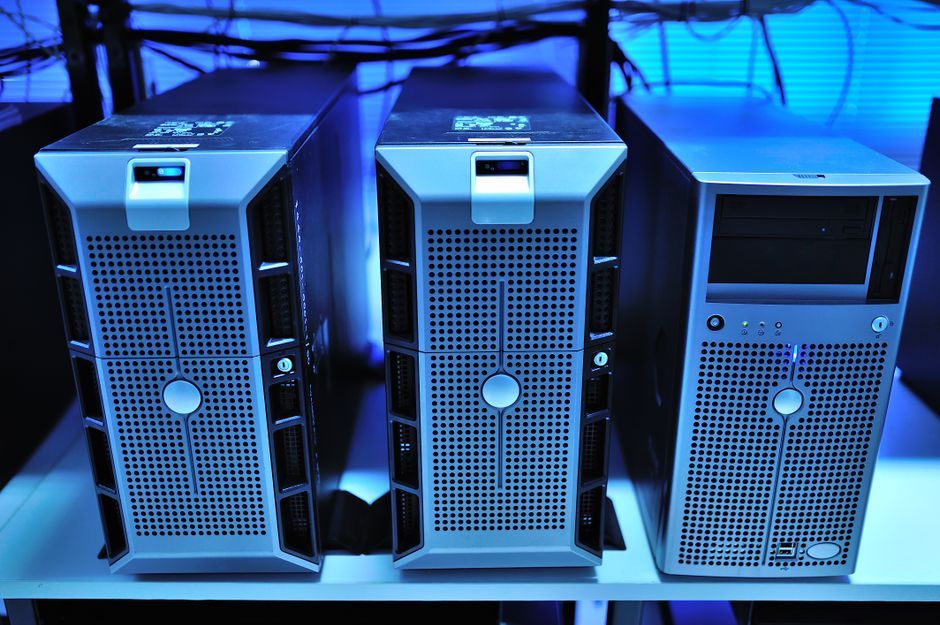
Stock photo for illustration only, not from the actual event
Examining the loanable funds market reveals why this matters. Institutional capital willing to absorb long-duration fixed-income paper is finite. When tech conglomerates issue half a trillion dollars of investment-grade notes, they bid directly against the United States Treasury and private enterprises, forcing investors to demand higher concession yields that drive up sovereign rates.
This mechanism creates a paradox of reflexivity where the artificial intelligence sector actively raises the hurdle rate required to justify its own capital investments. Because underlying silicon and high-performance GPUs face technological obsolescence within three to four years, a 150-basis-point increase in the corporate weighted average cost of capital compresses the discounted present value of distant terminal cash flows by twenty to thirty percent.
Vulnerability is concentrated in the secondary tier, including leveraged neocloud operators and merchant data center developers who financed GPU procurement through asset-backed debt facilities at floating rates of SOFR plus 350 to 500 basis points. With benchmark policy rates holding near 4 percent and long yields near 5 percent, all-in debt service reaches double-digit annual percentages.
If token inference prices continue to decay under competitive pressure, leveraged infrastructure owners will face severe refinancing friction, proving that capital markets are no longer willing to supply liquidity for free.
Source: Dev.to
Found something wrong in this article? Report an issue with this article
Comments
Leave a Comment