

Sri Lanka Court Convicts 15 Over 2019 Easter Bombings
Sri Lanka's High Court convicts 15 men for plotting the 2019 Easter Sunday suicide bombings that targeted churches and luxury hotels, killing 270 people.
Stock photo for illustration only, not from the actual event
- Sri Lanka's High Court finds 15 men guilty of plotting the 2019 Easter Sunday bomb attacks
- The coordinated blasts across three churches and three luxury hotels killed 270 people and injured over 500
- Naufer Moulavi, identified by prosecutors as the mastermind, is among those convicted
- The court session was adjourned before formal sentencing could be handed down in Colombo
Sri Lanka's High Court has delivered a verdict convicting 15 men who faced charges of plotting the devastating Easter Sunday suicide bombings in 2019. The coordinated terror attacks claimed the lives of 270 people and left more than 500 others injured. Among those found guilty by the court is Naufer Moulavi, whom prosecutors asserted was the primary mastermind behind the suicide bombing operations, while nine other defendants were acquitted of the charges.
The synchronized explosions struck three churches and three luxury hotels, marking the deadliest violent incident in Sri Lanka since the conclusion of the civil war in 2009. Foreign nationals accounted for 45 of the fatalities. All the bombers executing the attacks perished in the blasts. Investigators previously attributed the atrocities to Islamist extremists, noting that all 25 individuals indicted belonged to Sri Lanka's Muslim minority, with one suspect dying while in custody.
During the court proceedings, the defendants—who faced more than 23,000 combined offenses—were handcuffed in pairs and transported in two prison buses to the High Court located in the capital city of Colombo. The court session concluded with an adjournment prior to the delivery of official sentencing. Heavy security measures were enforced at the courthouse, with numerous police officers and commandos deployed around the premises before the verdicts were read.
The majority of the victims were Sri Lankan citizens, with children making up a significant portion of the deceased. The casualties included celebrity chef Shantha Mayadunne alongside her daughter, an entire young family of five, at least eight hotel staff members from the targeted properties, and five members of a single family hailing from the western city of Negombo. Foreign victims included 11 Indian nationals, eight Britons, and five Americans, alongside citizens from Australia, Bangladesh, China, Denmark, Japan, the Netherlands, Portugal, Spain, Sweden, Switzerland, and Turkey. Notably, three children of Danish billionaire Anders Holch Povlsen lost their lives during the attack on the Shangri-La hotel while vacationing with their family.
The 2019 Easter Sunday bombings triggered deep political and institutional fallout in Sri Lanka, exposing critical vulnerabilities in national security and intelligence sharing. The tragedy prompted intense public demands for accountability, leading to subsequent judicial scrutiny of security lapses and high-ranking officials.
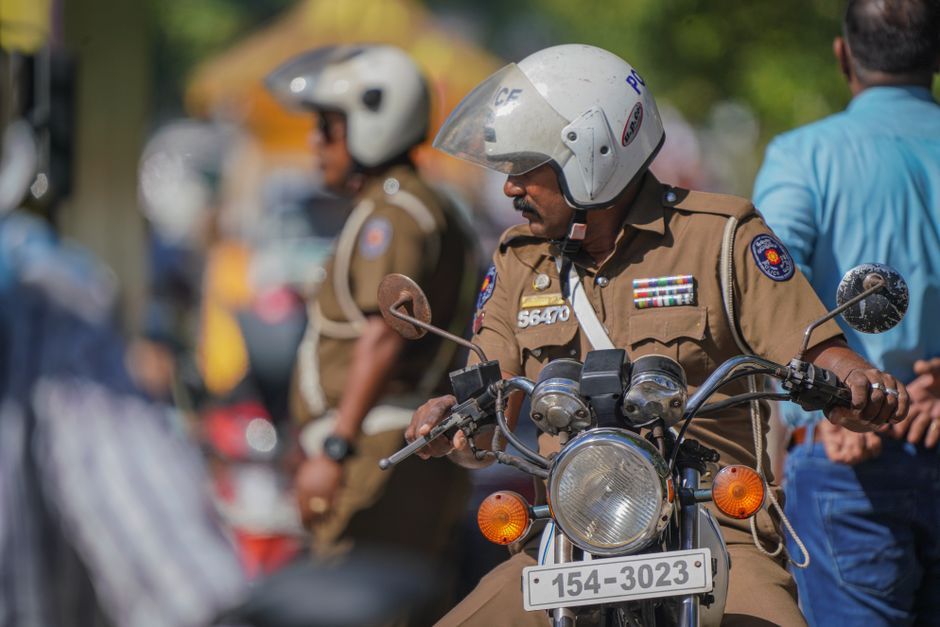
Stock photo for illustration only, not from the actual event
In the aftermath of the tragedy, Sri Lankan authorities acknowledged a major intelligence failure. Parliamentary hearings revealed that advanced warnings provided by India were not adequately shared with relevant security agencies. In 2023, the Supreme Court ordered former President Maithripala Sirisena to pay substantial financial compensation to victims after holding him responsible for national security lapses. Furthermore, two former senior officials were sentenced to death last month for criminal negligence linked to the bombings, though death sentences in Sri Lanka are routinely commuted to life imprisonment due to a longstanding moratorium on executions.
For years, Sri Lankan citizens have organized persistent demonstrations demanding full justice for those killed in the Easter attacks. The recent verdicts coincide with a separate ongoing investigation into former intelligence chief Suresh Sallay, who faces accusations of orchestrating the bombings alongside Islamist extremists. These allegations mirror claims featured in a 2023 documentary by British broadcaster Channel 4, which suggested the attacks were permitted to occur in order to bolster the political popularity of the Rajapaksa dynasty. Sallay, arrested in February, and former President Gotabaya Rajapaksa have both denied any involvement or wrongdoing.
Source: BBC World
Found something wrong in this article? Report an issue with this article
Comments
Leave a Comment