

Three takeaways from Trump's Super Intelligence summit
Donald Trump hosts a closed-door AI summit with top tech leaders at the White House, pushing Super Intelligence nomenclature.
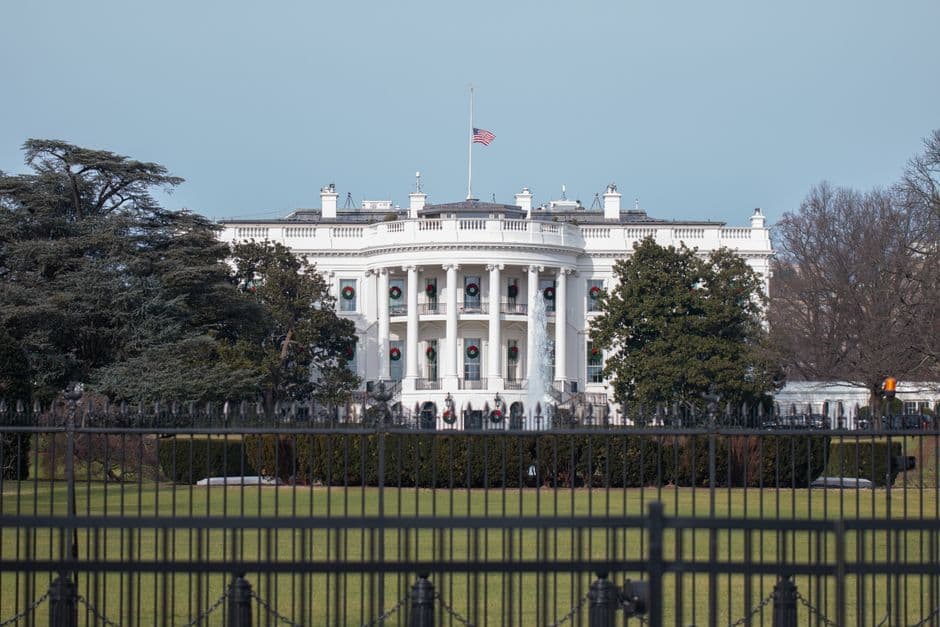
Stock photo for illustration only, not from the actual event
- Donald Trump held a closed-door AI summit with top technology leaders at the White House.
- AI firms agreed to take responsibility for technology safety and implement safeguards.
- Trump plans to establish a safety oversight board and backed data centre expansions.
The White House recently became the epicenter of global technology discussions as Donald Trump hosted a high-profile, closed-door artificial intelligence summit with top executives from the United States tech industry. The guest list featured prominent leaders from OpenAI, Anthropic, Nvidia, SpaceX, Meta, and Google. This critical gathering took place amid mounting calls from tech executives and experts demanding tighter oversight of artificial intelligence due to potential risks facing humanity.
Following the closed-door discussions, Trump and the tech leaders spent approximately 30 minutes fielding questions from the media. An agreement published online outlined that companies must take direct responsibility for ensuring the safety of their proprietary technology. Furthermore, the firms committed to executing safeguards that keep operational models aligned with their intended designs while quickly detecting and resolving technical issues.
Stock photo for illustration only, not from the actual event
The accord was formally signed by Donald Trump, Google chief Sundar Pichai, Anthropic chief Dario Amodei, Meta chief Mark Zuckerberg, OpenAI President Greg Brockman, SpaceX chief Elon Musk, and Nvidia chief executive Jensen Huang. Trump also announced plans to create a dedicated board overseeing AI tool safety, though he did not disclose specific members who would sit on the panel.
"The accord should be ignored, for the distraction it is."
Kimberlee Weatheral, law professor at the University of Sydney
Despite the high-profile signatures, several experts remained critical of the agreement. Jose Miguelito Enriquez, an AI governance researcher at Nanyang Technological University, noted that the pact shows an emerging consensus but fails to address developer accountability for incidents. University of Sydney law professor Kimberlee Weatheral similarly dismissed the pact as deeply unimpressive, arguing it allows companies to define safety on their own terms without clear penalties for breaches.
The White House AI summit highlights the ongoing tension between rapid technological innovation and regulatory governance. While self-regulatory frameworks allow tech giants to scale quickly, independent researchers continuously question whether voluntary compliance provides sufficient public protection against emerging systemic risks.
Addressing infrastructure demands, Trump reiterated robust support for the rapid expansion of data centres, which serve as foundational computing units for modern AI systems. Data centre developments have faced pushback from local communities concerned about soaring electricity consumption and local environmental impacts. A recent survey conducted by Marist Poll in partnership with NPR and PBS News revealed that 65% of registered voters opposed building data centres in their neighborhoods. Defending the projects, Nvidia chief Jensen Huang argued that these facilities function essentially as super intelligence factories driving domestic industrial growth.
Source: BBC Business
Found something wrong in this article? Report an issue with this article
Comments
Leave a Comment