

Cricket bad light rule: Has the sport missed a trick again?
Bad light in the Durban Test between South Africa and Australia wiped out over 60 overs, despite the ICC introducing pink balls to tackle the issue.

Stock photo for illustration only, not from the actual event
- Bad light cost Australia and South Africa over 60 overs across the first three days in Durban.
- The ICC recently amended rules to allow pink balls throughout Tests to combat gloom.
- Shaun Pollock notes a lingering stigma surrounding the pink ball among teams.
- Australia leads with 15 day-night Tests played, headed by top wicket-taker Mitchell Starc.
Bad light remains one of cricket's most persistent and frustrating dilemmas, halting fascinating passages of play whenever gloom sets in and visibility drops below safe levels for players on the pitch.
This recurring issue surfaced once again during the compelling first Test between South Africa and Australia at Kingsmead in Durban on South Africa's eastern coast, wiping out more than 60 overs across the opening three days. Despite a regulatory solution being added to cricket's rulebook just last week, teams have yet to utilize the option anywhere in the world.
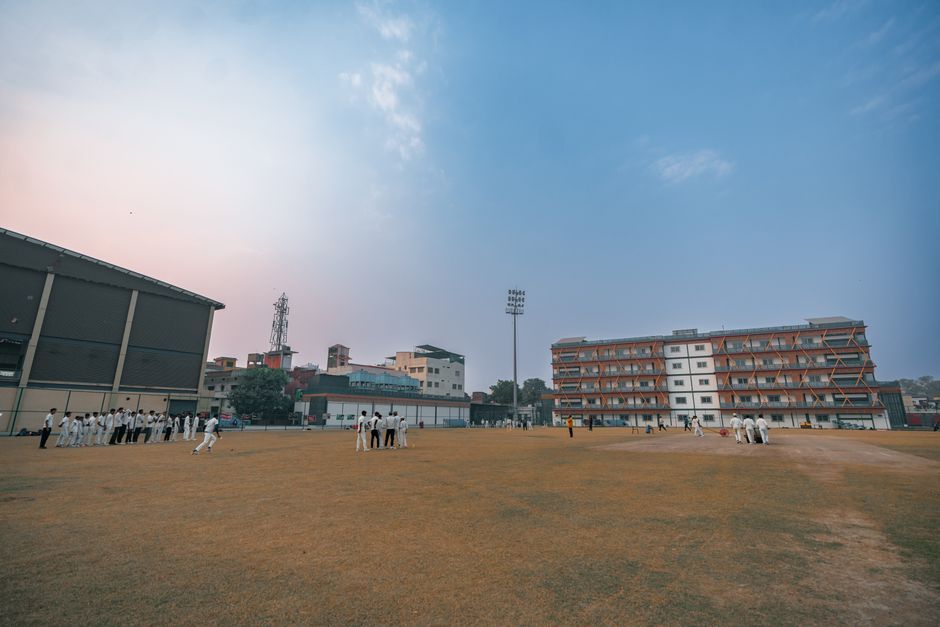
Stock photo for illustration only, not from the actual event
Play at Kingsmead kicks off at 09:30 local time, marking the venue's first October Test where the sun sets shortly after 18:00. On the opening day, however, clouds rolled in and umpires suspended play at 15:23 local time, allowing only 65.2 out of the scheduled 90 overs to be completed without any chance for the players to return.
BBC weather presenter Chris Fawkes explained the local atmospheric dynamics, stating, "Very quickly in the morning, as temperatures have risen inland as the sun heats the ground, a sea breeze has formed with winds coming from the sea into Durban, increasing humidity levels and bringing cloud in before relative humidity rises toward the evening."
The frequent interruption of Test cricket due to bad light at venues like Kingsmead highlights the inherent vulnerability of outdoor sports to local coastal weather patterns. Unlike indoor venues, strict safety thresholds must be met, creating an unavoidable trade-off between player protection and the uninterrupted flow of a five-day match.
Following a trial earlier in the year, the International Cricket Council updated its playing conditions to permit the pink ball in Tests specifically to solve these scenarios. Crucially, the rule does not allow a red ball to be swapped for a pink one mid-match—a proposal previously floated by former England captain Michael Vaughan—but instead requires teams to agree prior to the Test on using the pink ball throughout.
"If Australia were 124-6 and we were using the pink ball, everyone would have said it was the pink ball's fault... The pink ball would have meant we played 45 more overs of Test cricket and that is why I am keen to introduce it, and not just for day-night games."
Shaun Pollock
Former South Africa bowler Shaun Pollock, who served on the ICC committee recommending the change, believes a strong stigma prevents teams from adopting the pink ball. Critics often argue it swings too much or is harder to track visually, with batting averages dropping to their lowest points during the evening sessions of day-night fixtures.
Australia boasts extensive experience in this format, having featured in 15 day-night Tests—ten more than any other nation. Unsurprisingly, the top four wicket-takers in day-night matches are all Australians, led by left-armer Mitchell Starc with 89 scalps across 15 Tests. Meanwhile, former South African bowler Vernon Philander suggested he would prefer officials having the power to switch balls mid-match, even if it raises integrity questions.
Source: BBC Sport
Found something wrong in this article? Report an issue with this article
Comments
Leave a Comment