

Inside Ukraine's Operation Vivaldi and Starlink's Role
Ukraine liberates 277 sq km in the Donbas region during Operation Vivaldi, while facing unexpected restrictions on critical Starshield satellite communications.

Stock photo for illustration only, not from the actual event
- Ukraine advances in the eastern Donbas region via Operation Vivaldi
- Military forces report liberating 277 square kilometers of territory
- Starshield military satellite network provides vital broadband connectivity
- Kyiv raises concerns after unannounced restrictions are imposed on the system
Inside a command bunker, Ukrainian commanders monitor live battlefield streams on computer screens while a Russian drone zips across the display. With a cigarette in one hand and a radio in the other, an officer calls in a counter-drone to neutralize the threat and warns vulnerable soldiers walking across open ground near the front line. These troops are currently being rotated out after spending three months forcing Russian forces backward.
This engagement forms part of Operation Vivaldi, a Ukrainian counter-offensive that has reportedly liberated 277 square miles or equivalent to 277 sq km in the eastern Donbas region over recent months. Named after the Italian composer's violin concerto to reflect its four distinct stages, the successful assault disrupted a Russian pincer movement that threatened to encircle key Fortress Belt cities remaining under Ukrainian control.
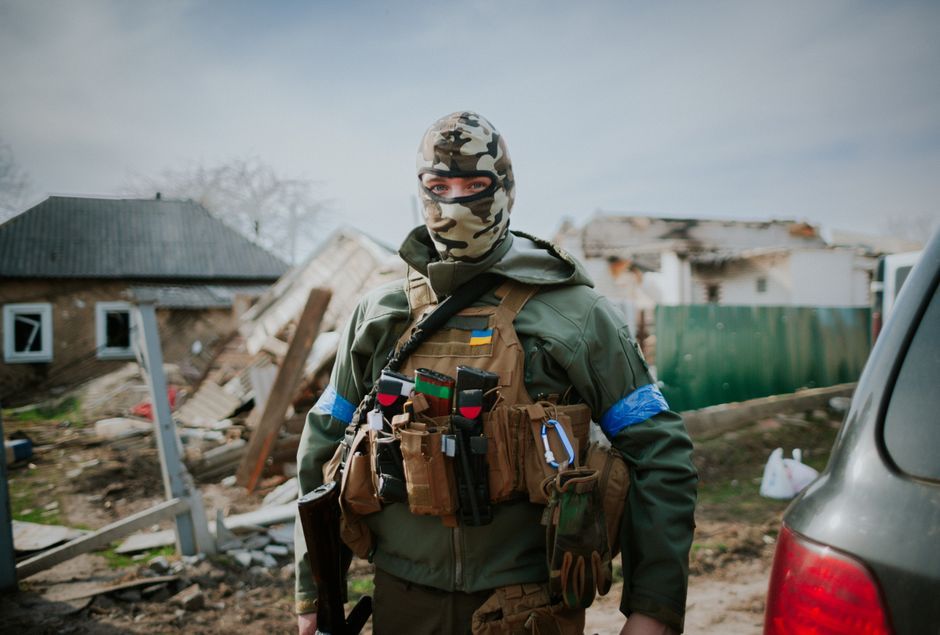
Stock photo for illustration only, not from the actual event
Despite territorial gains, Russian reconnaissance and explosive drones remain a persistent threat. Phoenix, commandant of the Revenge Brigade's Silver Trinity unit, notes that his men encounter roughly 10 enemy drones on an average day. He watches intently as a Ukrainian snare drone deploys a net from above, dragging a Russian scout drone out of the sky before it can coordinate further aerial strikes against infantry units.
Modern warfare in Ukraine relies heavily on digital connectivity and networked communications. Technologies such as Starlink and its military counterpart Starshield serve as the digital backbone for live streaming battlefield intelligence, targeting, and drone coordination. Unannounced restrictions on these satellite networks pose severe tactical risks, highlighting the complex reliance on external commercial tech providers during active military operations.
Beneath the contested airspace, unmanned ground vehicles deliver supplies, evacuate wounded soldiers, and spearhead assaults against enemy positions. Modern combat operations depend entirely on digital links for observation, mobility, and communication, though human soldiers in trenches ultimately hold the territory. Weary troops recently completed a 95-day push along the front line, culminating in an emotional reunion at the command post.
"The men trained for months. We had to completely restructure our approach because previously we had been defending, and now we had to go on the offensive."
Phoenix, Commandant of the Revenge Brigade's Silver Trinity unit
In Karpivka, a village occupied since April, Ukrainian forces discovered 61-year-old Volodymyr Zamota as the sole remaining resident after neighbors fled the 2025 Russian advance. Having survived eight months in total isolation, his situation highlights the profound devastation across recaptured areas where residents cannot yet safely return. Military leaders emphasize that securing these advantageous positions establishes a vital bridgehead for future operations.
Source: BBC World
Found something wrong in this article? Report an issue with this article
Comments
Leave a Comment