

France fire crews face searing heat in battle to contain flames
Thousands of firefighters and volunteers battle fierce wildfires in southwestern France as temperatures peak at around 40C.
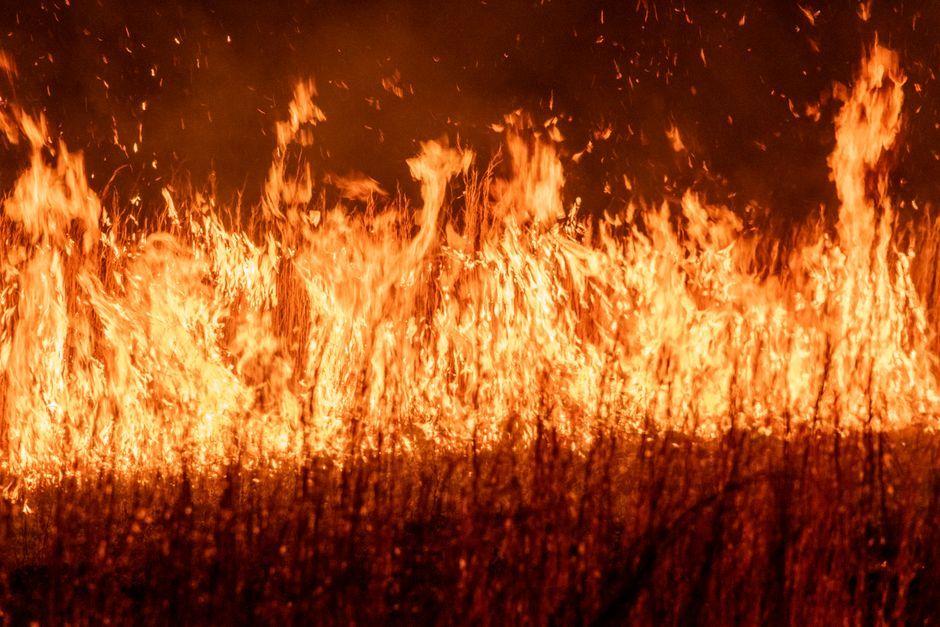
Stock photo for illustration only, not from the actual event
- Three Canadair aircraft drop over 1,000 gallons of water each on Gironde wildfires
- Temperatures peaking near 40C create a constant threat of spontaneous reignition
- Tens of thousands of residents and tourists forced to flee the region
- An army of volunteers and crews from across France join the operation
The aerial cavalry of three Canadair aircraft flying overhead looks as impressive as it sounds. They arrive in formation before sharply banking over towards the thick plume of black smoke ahead, dumping individual payloads of more than 1,000 gallons of water onto the flames below, followed by a succession of helicopters releasing red fire retardant.
As the smoke eases, firefighters move into the forest on foot to try and contain the latest flare-up. They remain the principal concern for the thousands of crews and volunteers combating the wildfires that have raged for a week, forcing tens of thousands of residents and tourists to flee the area.
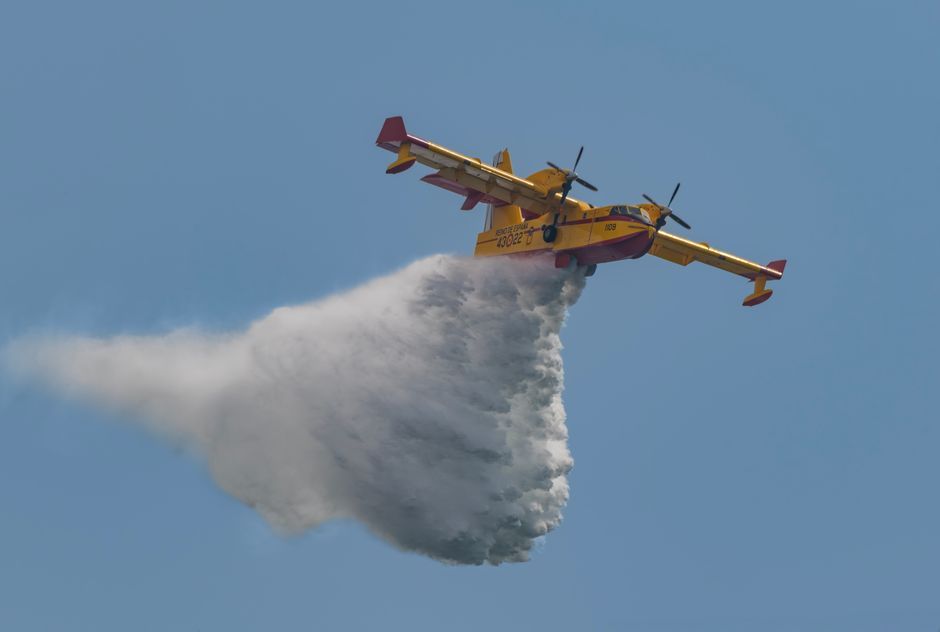
Stock photo for illustration only, not from the actual event
As temperatures peak at around 40C, fires restarting on their own present a constant threat. After 20 minutes or so, the blaze being watched is brought under control, only for another to suddenly emerge on the opposite side of the road.
"Leave now!" shouts an understandably irritable officer as he drives past, while the smoke becomes thicker and more aggressive, signaling that it is indeed time to leave.
The Gironde region in southwestern France is characterized by dense pine forests and dry, powdery soil, creating a highly volatile environment during intense summer heatwaves. When temperatures reach 40C combined with dry conditions, spontaneous reignitions and rapid fire spread become major hazards, stretching firefighting resources to their absolute limits.
The vast scale of the infernos ravaging France's south-western Gironde region means the direction of the smoke is not always obvious, descending as you travel west from Bordeaux along empty roads and through deserted villages. The powder-like soil covered in endless pinecones and dried leaves explains why the wildfires have spread at such an alarming rate.
"When they said I had to leave, I said no!"
Pierre Alexandre
Pierre Alexandre had refused to leave his bungalow when asked by firefighters, noting that the epicentre of the fire started in the woodland right next to his home. He showed a picture of himself sitting on the roof of his house in the dark, explaining it was actually taken in the afternoon after he told his wife and daughter to leave, giving his 19-year-old son, Clement, the option to stay, which he did.
Behind the professionals stands an army of volunteers driving towards danger to deliver or spray water themselves. Hugo, who grew up in the area and returned from Bali, came back to watch his mother's house in the village of Arès, which sits perilously close to the wildfires.
Fire crews have arrived from all corners of France—from Brittany in the north to Marseille and Lyon in the south. When not directly dousing flames, they water the soil and vegetation to prevent future fires from progressing.
Source: BBC World
Found something wrong in this article? Report an issue with this article
Comments
Leave a Comment